


Why Are Metal Parts Prone to Rusting During Sea Transport?
2026-05-27 17:09For buyers and exporters, a long-standing and difficult problem is rusting of goods upon arrival at the destination port. The maritime environment is considered one of the most severe environments for metal corrosion. High humidity, salt spray, temperature fluctuations, and condensation inside containers combine to make steel products subject to a much higher risk of corrosion than in conventional warehousing environments.
Why Is Rust More Likely to Occur in Maritime Environments Than in Ordinary Warehousing?
Corrosion begins when the surface of steel comes into contact with moisture, oxygen, and electrolytes simultaneously. The marine transport environment possesses all three conditions. Compared to ordinary warehouses, maritime transport faces the following challenges:
1.Prolonged high humidity.
2.Marine salt spray corrosion.
3.Diurnal temperature variations.
4.Long transport periods.
5.The enclosed space inside containers.
These factors combined result in a faster corrosion rate than in land transport and warehousing environments.
Reason One: Salt Spray Corrosion Accelerates Steel Oxidation.
Marine air contains a large number of sodium chloride particles; these tiny salts adhere to the metal surface, forming an electrolyte layer. Compared to ordinary moisture, salt increases the conductivity of steel surfaces, thus accelerating electrochemical corrosion reactions. This is particularly noticeable on steel structural connectors, architectural hardware, machined parts, and cast iron components.
Reason Two: Container Rain.
During the day, containers are exposed to sunlight, and their internal temperature can rise above 50°C. At night, the sea surface temperature drops, causing the container's steel plates to cool rapidly. Water vapor in the air condenses into water droplets upon contact with this cooling environment, which then drips onto the cargo surface, causing rust.
Reason Three: Prolonged High Humidity Damages the Protective Layer on Metal Surfaces.
Sea freight typically takes 10-40 days, during which relative humidity often exceeds 80%. When humidity remains consistently high, the natural oxide protective layer on the steel surface gradually fails, allowing corrosion to spread rapidly.
Reason Four: Temperature Fluctuations Cause Repeated Condensation.
During sea transport, containers may pass through tropical waters, subtropical waters, and temperate ports, where temperatures constantly change. Each temperature difference can lead to the formation of new condensation. Even if the product is dry during packaging, it may still be affected by moisture during transportation.
Which Metal Parts Are Most Prone to Rusting During Sea Freight?
1.Machined parts: Turned, milled, and precision parts have high surface activity, making them more susceptible to flash rust after machining.
2.Construction steel products: Steel structures generally have a large surface area, leading to rapid corrosion spread when exposed to moisture.
3.Automotive parts: High precision requirements mean even slight rust can result in product defects.
Why Are More and More Companies Choosing Anti-Corrosion VCI Paper for Steel for Sea Freight?
VCI vapor phase corrosion inhibition technology releases rust-inhibiting molecules, creating a protective environment inside the packaging. These active molecules adhere to the metal surface, forming an ultra-thin protective layer. This blocks moisture, oxygen, salt spray contaminants, etc., thus reducing the risk of corrosion. Compared to traditional rust-preventive oils, anti-corrosion VCI paper for steel has the following characteristics:
1.No cleaning required.
2.Easy to use.
3.High packaging efficiency.
4.Suitable for export transportation.
5.Suitable for complex structural parts.
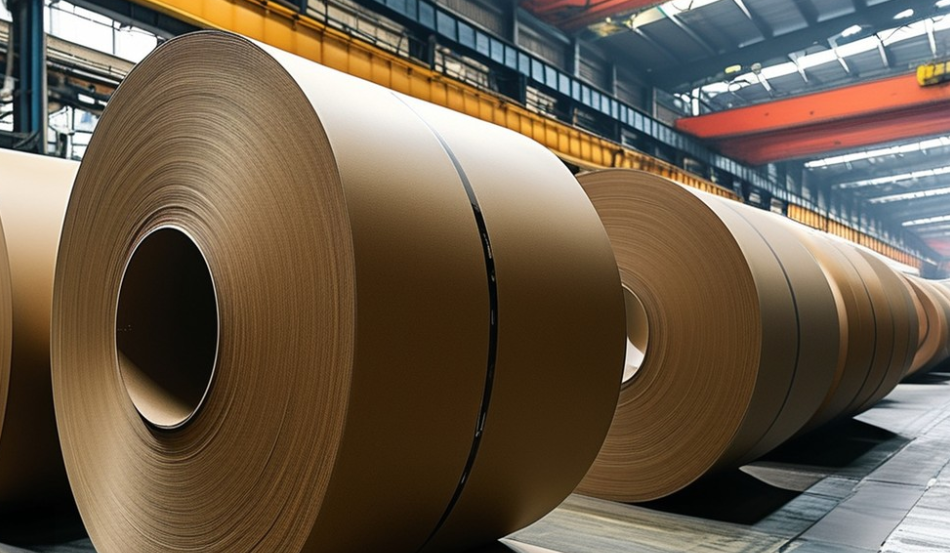
Our Anti-Corrosion VCI Paper for Steel.
For steel products exported by sea, we offer various specifications of anti-corrosion VCI paper for steel.
Product Model:
SF/H (PO, WO, PA, WA).
PO: plain paper, non-composite structure; PA: plain paper, single-sided lamination structure.
WO: crepe paper, non-composite structure; WA: crepe paper, single-sided lamination structure.
Product Specifications:
| Structure type | Common width specifications | Description |
| PO structure | 787mm / 1050mm | Commonly used for general packaging applications |
| PA structure | 787mm / 1050mm | Reinforced structure, suitable for heavy parts packaging |
| WO structure | 1575mm | Large format design, suitable for large-size workpieces |
| WA structure | 1575mm | Enhanced moisture-proof and rust-proof performance, suitable for export |
How to Choose the Right Rust-Proof Packaging Solution for Sea Freight?
1.If the export cycle is less than 15 days, anti-corrosion VCI paper for steel is sufficient for rust prevention.
2.If the export cycle is 15-45 days, it is recommended to use anti-corrosion VCI paper for steel + desiccant.
3.If the export cycle is more than 45 days, it is recommended to use a combination of anti-corrosion VCI paper for steel + PE barrier packaging + desiccant.
Conclusion:
Rusting of metal parts during sea freight is not caused by a single factor, but by the combined effects of salt spray, high humidity, container rain, and temperature condensation. Using different anti-corrosion VCI paper for steel to address these different situations can effectively reduce the risk of rust, thereby helping companies reduce maintenance costs.
If you are exporting steel structural components, mechanical parts, or other metal components, please leave a message to contact us and we can provide you with anti-corrosion VCI paper for steel suitable for the sea freight environment.