


How Should Desiccants and Vci Packaging Paper Be Used Together?
2026-07-04 15:29VCI paper and rust-preventive desiccants are not interchangeable products; they each play different protective roles. One is responsible for active rust prevention, and the other for humidity control. Only by using them together properly can they effectively cope with the complex corrosive environment during maritime transport. For companies exporting to Southeast Asia, the Middle East, South America, and other high-temperature and high-humidity regions, this combination solution has become an increasingly common choice.
Why is the effect of using VCI packaging paper alone sometimes unsatisfactory?
The core function of VCI packaging paper is to continuously release VCI vapor-phase corrosion inhibitor molecules, forming a protective layer within the packaging space, covering the metal surface, and slowing down the erosion of the metal by oxygen, moisture, and corrosive media. However, VCI is not a panacea. If the packaging is severely damaged during transportation, or if the humidity inside the container remains at extremely high levels for a long period, a large amount of condensation will adhere directly to the product surface, and even with VCI protection, the rust-preventive effect may be affected. Especially in Southeast Asian countries such as Indonesia, Vietnam, Thailand, and the Philippines, where air humidity is high year-round, coupled with the "container rain" formed during long-distance maritime transport, the risk of metal corrosion increases. Therefore, relying solely on a single rust-preventive material is sometimes insufficient to meet the demands of long-term transportation. To address these high-humidity environments, CVCI continuously optimizes its VCI packaging paper formula, ensuring its sustained protective effect in various packaging environments. CVCI also recommends more suitable packaging solutions based on the customer's export region, resulting in more stable rust prevention.
What problem does a rust-preventive desiccant actually solve?
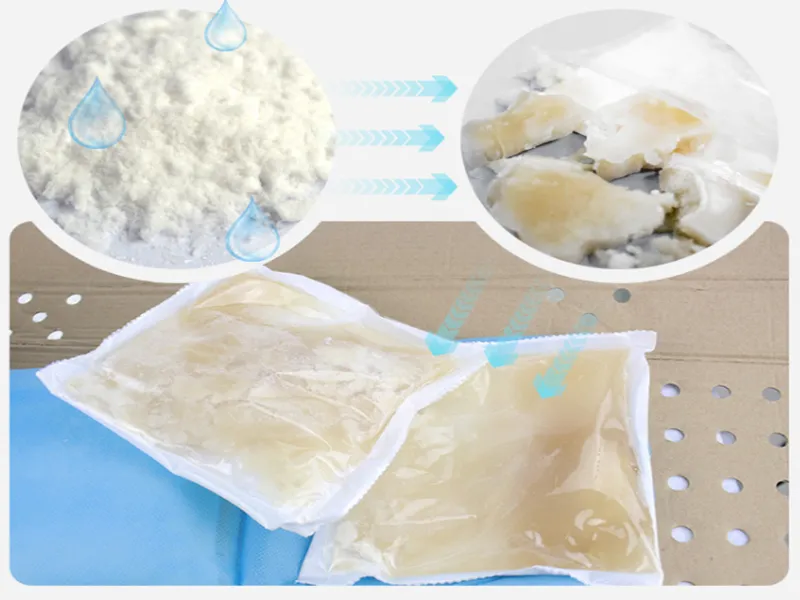
If VCI rust-preventive paper protects the metal itself, then a rust-preventive desiccant primarily improves the packaging environment. During sea transport, the diurnal temperature range causes a large amount of moisture to accumulate inside containers. When the temperature drops, this moisture condenses into small droplets, adhering to the packaging and product surfaces—the familiar "container rain." A rust-preventive desiccant continuously absorbs moisture from inside the packaging and container, reducing relative humidity and minimizing condensation at its source. In other words, the desiccant doesn't actively prevent rust, but it creates a more favorable working environment for the VCI packaging paper. The two work synergistically to achieve better protective results. CVCI not only produces VCI packaging paper but also provides highly absorbent rust-proof desiccants, helping customers establish a more comprehensive packaging protection system from both rust prevention and moisture control perspectives.
Why is it recommended to use VCI packaging paper and Container Desiccants together?
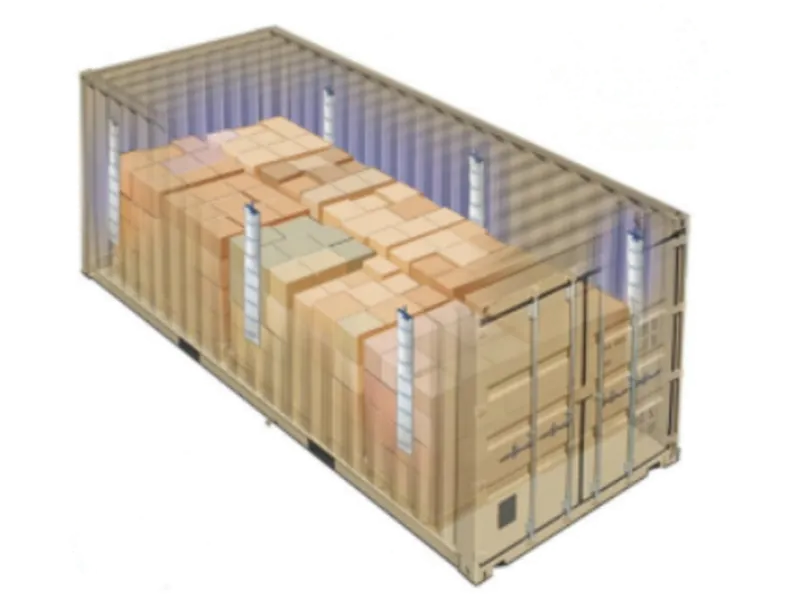
Generally, VCI packaging paper directly wraps the product, maintaining close contact with the metal and continuously releasing VCI molecules; the rust-proof desiccant is placed inside the packaging box or container, continuously absorbing moisture from the air and reducing the humidity of the packaging environment. In this way, the metal surface receives active protection from VCI molecules, while the humidity inside the packaging is effectively controlled, reducing the probability of rust even during long transportation times. This combination of active rust prevention and active moisture control is currently widely used in industries such as automotive parts, steel, machinery, bearings, gears, and hardware tools. Leveraging its complete product system, CVCI can help customers tailor more appropriate VCI rust-proof paper and desiccant usage solutions based on product characteristics, transportation cycles, and packaging structures, rather than simply selling single products.
How should different industries use them together?
Different products have different requirements for packaging methods. For precision-machined parts such as automotive components, bearings, and gears, VCI packaging paper is typically used for individual wrapping, with an appropriate amount of rust-preventive desiccant placed inside the outer packaging to ensure stable humidity during transportation.
For products such as steel plates, steel coils, and large machinery, VCI packaging paper is more suitable for interlayer isolation or covering critical areas. Desiccants are also placed inside wooden crates, pallet packaging, and containers. If necessary, additional VCI rust-proof film can be added to create a sealed protective space.
If products are exported to high-humidity regions such as Southeast Asia and South America, it is recommended to appropriately increase the amount of Container Desiccant and adjust the packaging plan according to the transportation cycle. CVCI has extensive international export experience and can provide more professional one-stop rust-proof packaging advice for industries such as machinery manufacturing, steel processing, and the automotive industry, based on the customer's actual application scenarios.
Is more desiccant always better?
The amount of Container Desiccant needs to be calculated based on packaging space, product weight, transportation time, and transportation route. Insufficient quantity will result in limited moisture absorption capacity; blindly increasing the quantity will not only increase packaging costs but may also occupy packaging space and affect packing efficiency.
Therefore, a more reasonable approach is to scientifically configure desiccants based on packaging volume and the expected transportation environment, rather than simply increasing quantity. When serving overseas clients, CVCI recommends more suitable desiccant configurations based on the export country, transportation cycle, and container specifications, helping clients control overall packaging costs while ensuring protective effectiveness.
CVCI has long focused on the research and development and production of VCI packaging paper materials, currently offering a complete product series including VCI rust-proof paper, VCI rust-proof film, Woven Reinforced VCI Paper, Container Desiccants, and composite absorbent paper. Relying on a mature R&D team and modern production lines, we can customize more scientific rust-proof packaging solutions for clients based on product materials, packaging methods, transportation routes, and target markets. Our products are currently exported to Vietnam, Thailand, Indonesia, Malaysia, Japan, and many other countries and regions, accumulating rich experience in packaging for high-humidity environments in Southeast Asia.
Welcome to contact CVCI for customized rust-proof packaging solutions.
If you are looking for VCI packaging paper, Container Desiccants, or wish to optimize your existing export packaging solutions, please contact CVCI. We not only provide high-quality VCI rust-proof paper and Container Desiccants, but also offer customized one-stop rust-proof packaging solutions tailored to your product type, shipping method, and export market. We welcome global customers to visit our CVCI factory to learn about our production capabilities, R&D strength, and quality management system, and work together to create more efficient, safe, and reliable metal rust-proof packaging solutions.