


What is the difference between Woven Reinforced VCI Paper and VCI Anti Rust Paper?
2026-04-30 10:38In the field of metal anti-corrosion packaging, VCI anti rust paper has long been a widely used material. However, as application scenarios become increasingly complex—particularly in sectors such as steel exports and heavy equipment transport—many enterprises have begun to turn to a different product: Woven Reinforced VCI Paper.
What is Standard VCI Anti Rust Paper?
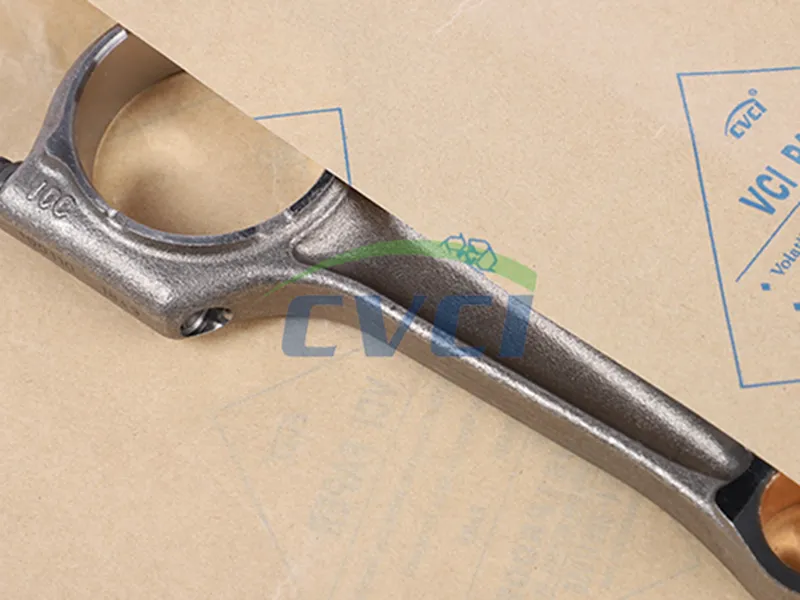
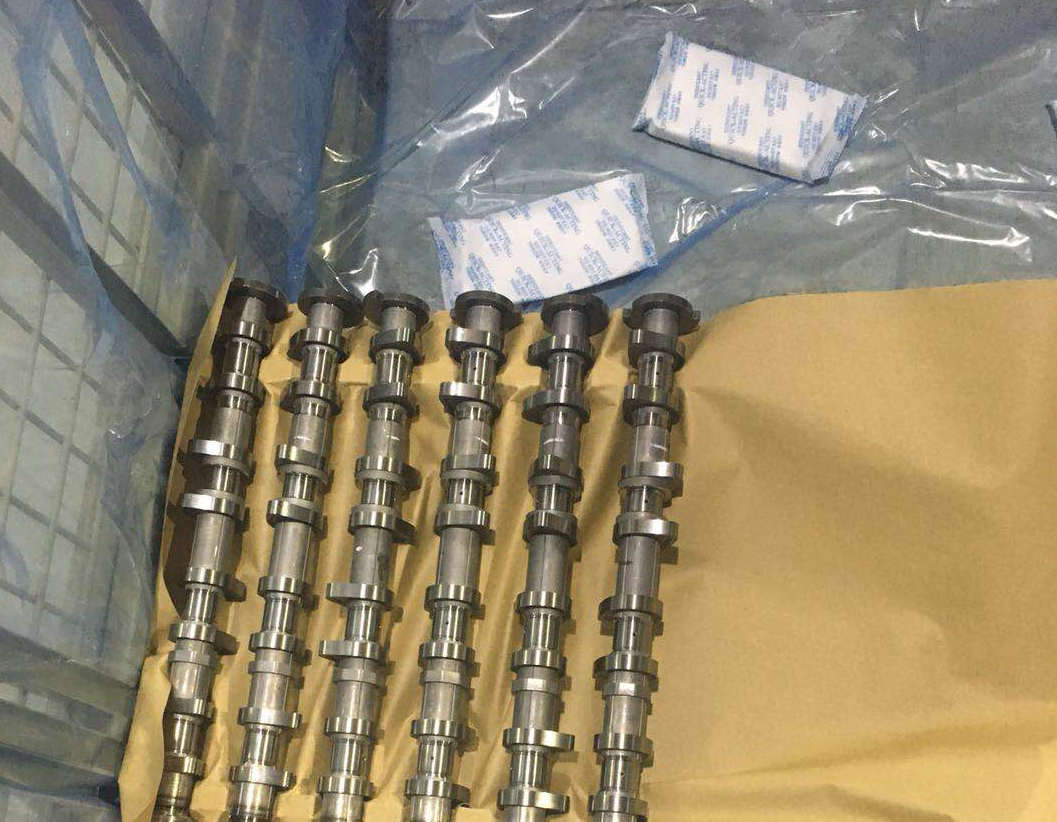
Standard VCI anti rust paper is, in essence, a functional paper infused with VCI. Its working principle is simple: within an enclosed space, it releases anti-corrosion molecules that adhere to the metal surface, forming a protective film that slows down oxidation reactions.
The advantages of this material lie in its ease of use and moderate cost, making it highly suitable for small to medium-sized components, mechanical parts, and short-duration transit scenarios. For applications involving relatively stable environments and shorter shipping times, standard VCI anti rust paper is entirely sufficient to meet requirements.
However, since its structure is primarily paper-based, it faces certain limitations regarding tensile strength and puncture resistance—limitations that become particularly apparent in heavy-duty packaging applications.
Does your product require VCI rust-proof packaging?
CVCI - a professional VCI rust-proof packaging manufacturer, protecting your products
Contact Us Today to request our latest B2B price list and apply for a Commercial Sample.
Does your product require VCI rust-proof packaging?
CVCI - a professional VCI rust-proof packaging manufacturer, protecting your products
Contact Us Today to request our latest B2B price list and apply for a Commercial Sample.What is Woven Reinforced VCI Paper?
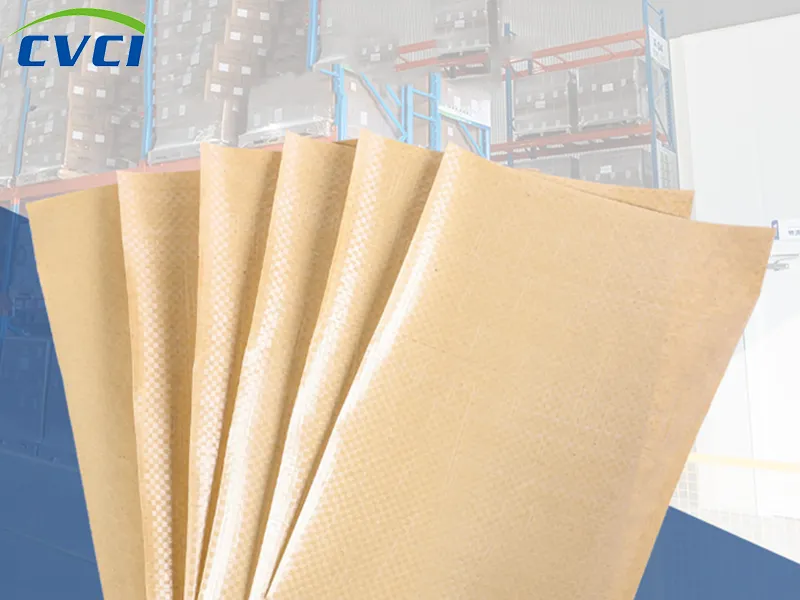
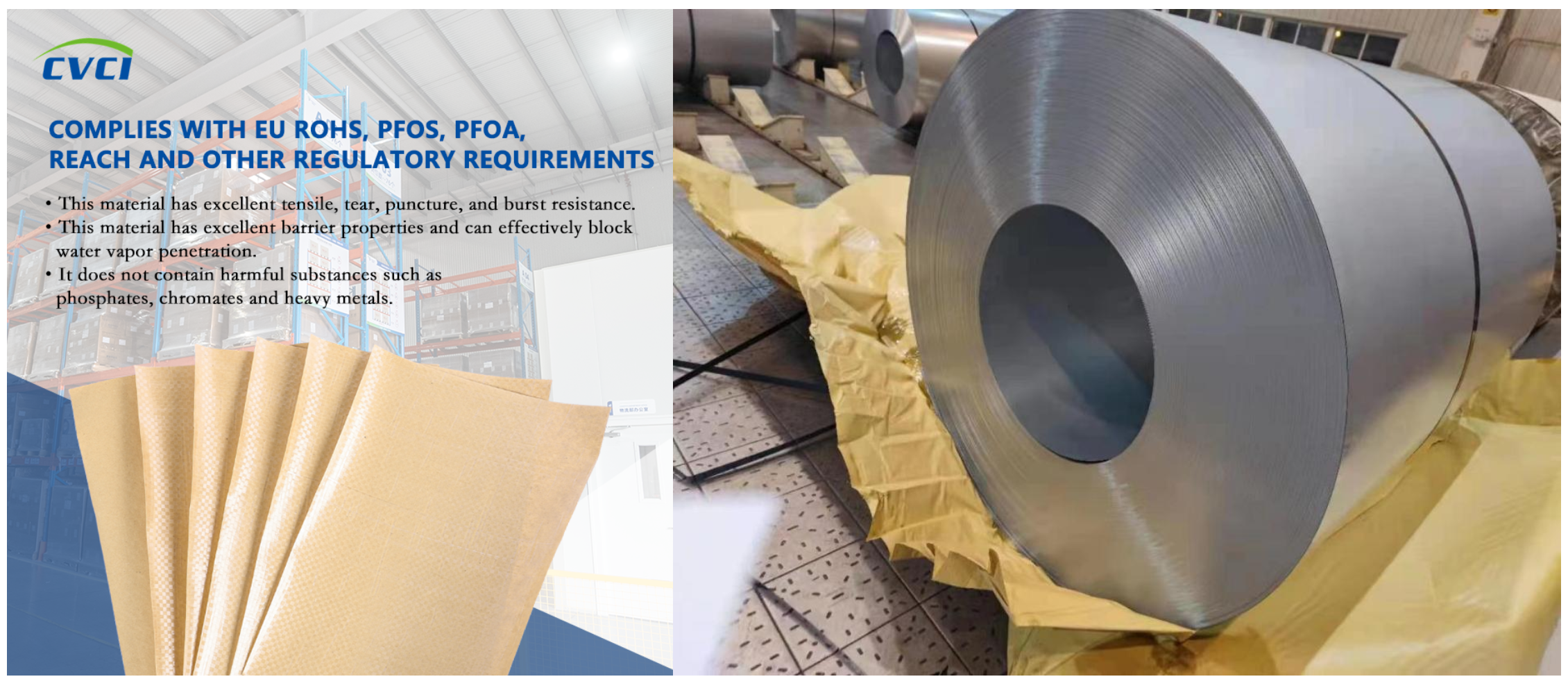
Woven Reinforced VCI Paper can be understood as an upgraded version of standard VCI anti rust paper; however, this upgrade involves more than just increased thickness—it represents a fundamental structural modification. It incorporates a woven reinforcement layer within the paper substrate, creating a multi-layered composite structure. This design allows the material to retain its anti-corrosion capabilities while significantly enhancing its mechanical properties. For instance, in scenarios such as packaging steel coils or transporting heavy machinery, the material must withstand tensile forces, abrasion, and even impact; if its strength is insufficient, it is prone to tearing or damage. The addition of the woven reinforcement structure ensures that this anti-rust paper not only "prevents rust" but also possesses exceptional "structural durability." This is precisely why it is increasingly being adopted in highly demanding application environments.
The Core Difference
Fundamentally, the primary distinction between the two lies not in their anti-corrosion efficacy, but in their structural strength.
Standard VCI anti rust paper functions primarily as a specialized material, with its main role being to create a rust-inhibiting environment. In contrast, Woven Reinforced VCI Paper serves as an integrated functional-structural material; it not only prevents rust but also fulfills the critical role of providing structural integrity to the packaging itself.
This distinction is of paramount importance in practical application. For instance, during the transportation of steel coils, if the packaging material is torn or punctured—even if it contains internal rust-inhibiting agents—those agents will no longer be able to function effectively. Enhanced materials, however, can maintain their structural integrity even within complex transportation environments, thereby ensuring that the rust-prevention effect remains continuously effective.
How Do Usage Scenarios Differ?
When selecting materials, the specific application scenario serves as the most critical criterion.
Standard VCI rust-inhibiting paper is better suited for lightweight to medium-weight products—such as mechanical components, standard parts, and hardware—and performs particularly reliably during warehousing or short-distance transportation.
In contrast, Woven Reinforced VCI Paper is better suited for high-risk scenarios involving items such as steel coils, steel plates, and large-scale machinery. These products are heavy and often feature sharp edges, placing much higher demands on packaging strength during transit. If standard rust-inhibiting paper is used in such cases, it is highly susceptible to damage during the process, thereby increasing the risk of corrosion. The advantages of reinforced materials become particularly evident during maritime shipping or when exporting to regions characterized by high temperatures and high humidity, such as Southeast Asia.
How Do You Make the Right Choice?
In reality, there is no single "absolutely superior" material; there is only the choice that is most appropriate for your specific needs.
If your products are relatively lightweight, have short transit cycles, and are handled within a relatively stable environment, standard VCI rust-inhibiting paper will fully meet your requirements while offering a more cost-effective solution.
However, if you are dealing with heavy-duty products, long-duration transit, or situations where packaging reliability is of paramount importance, opting for Woven Reinforced VCI Paper is the more prudent choice. From a long-term perspective, this not only minimizes the risk of physical damage but also reduces the additional costs associated with corrosion-related issues.
As a manufacturer dedicated to the R&D and production of VCI rust-inhibiting materials, CVCI possesses robust production capabilities and a mature supply chain system. We offer two primary product categories—Standard VCI Rust-Inhibiting Paper and Woven Reinforced VCI Paper—to effectively meet the diverse requirements of various application scenarios.
More importantly, we offer customization services tailored to our clients' specific operating environments. This includes customizing material structure, basis weight, dimensions, and rust-inhibiting performance characteristics. Whether you require packaging for lightweight components or transportation solutions for heavy-duty products such as steel coils and plates, we can provide the most suitable solution for your needs.
If you are currently seeking a more reliable and flexible supplier of rust-inhibiting packaging solutions, we invite you to contact us at any time to discuss your requirements. We also extend a sincere invitation for you to visit our facility in person to gain a deeper understanding of our production capabilities and R&D infrastructure, allowing us to collaborate on finding the optimal rust-prevention strategy for your business.