



The Impact of Indonesian Maritime Environment on Metal Product Corrosion
2026-06-30 14:48As one of Southeast Asia's largest economies, Indonesia is a crucial export market for Chinese machinery, auto parts, steel, hardware tools, and industrial products. In recent years, with the continuous growth of Sino-Indonesian trade, more and more Chinese manufacturers have begun to focus on Indonesia as a key overseas market. However, many exporters encounter a common problem: products that are perfectly qualified when leaving the factory exhibit varying degrees of rust, oxidation, and even corrosion upon arrival in Indonesia. In fact, the cause is not the product itself, but Indonesia's unique maritime environment and tropical climate. For metal products that need to undergo 30 to 60 days of sea transport, even the best products can suffer from corrosion during transit if the packaging is not properly designed, affecting customer experience. Therefore, more and more exporters are beginning to emphasize the application of VCI packaging paper in maritime packaging, hoping to reduce transportation risks from the source.
Why are metal products exported to Indonesia more prone to rust?
Located near the equator, Indonesia has a typical tropical maritime climate, characterized by high temperatures and humidity year-round, with air humidity consistently above 70% to 90%, and even higher in some coastal areas. For metal products, this environment naturally acts as a corrosion accelerator.
In addition, most exported products undergo long-haul sea transport. From Chinese ports to major Indonesian ports, the journey involves exposure to not only ocean humidity but also significant diurnal temperature fluctuations. When the internal temperature of the container changes, condensation easily forms, a phenomenon known in the industry as "container rain." This moisture continuously adheres to the metal surface, and without effective rust protection, oxidation occurs rapidly.
Therefore, more and more customers exporting to Indonesia are focusing on comprehensive rust-proof packaging solutions from the outset of their projects, not just the products themselves. CVCI has long served the Southeast Asian market and has accumulated extensive experience in Indonesia's high-temperature, high-humidity, and long-haul sea transport environment. We recommend VCI packaging paper solutions tailored to the local market, based on the customer's product materials, shipping time, and packaging methods.
What factors most easily lead to metal corrosion during sea transport?
Many companies believe that seawater is the main cause of product rust, but the real factor affecting product quality is often the internal environment of the container. During sea transport, the container temperature rises continuously during the day and drops rapidly at night, causing water vapor in the air to condense and adhere to the packaging and product surfaces. If packaging materials cannot effectively isolate the corrosive environment, rust spots may gradually appear on the product during transportation, even if the product does not directly contact seawater. Furthermore, port stacking, transshipment, multiple loading and unloading operations, and overseas warehousing further extend the time the product is exposed to high humidity. Therefore, products exported to Indonesia need to consider not only the transportation stage but also subsequent warehousing protection. To address these complex transportation environments, CVCI continuously optimizes its VCI packaging paper formula, enabling it to continuously release VCI corrosion-inhibiting molecules inside the packaging, providing more stable and durable rust protection for metal products and meeting the needs of long-term sea freight and warehousing.
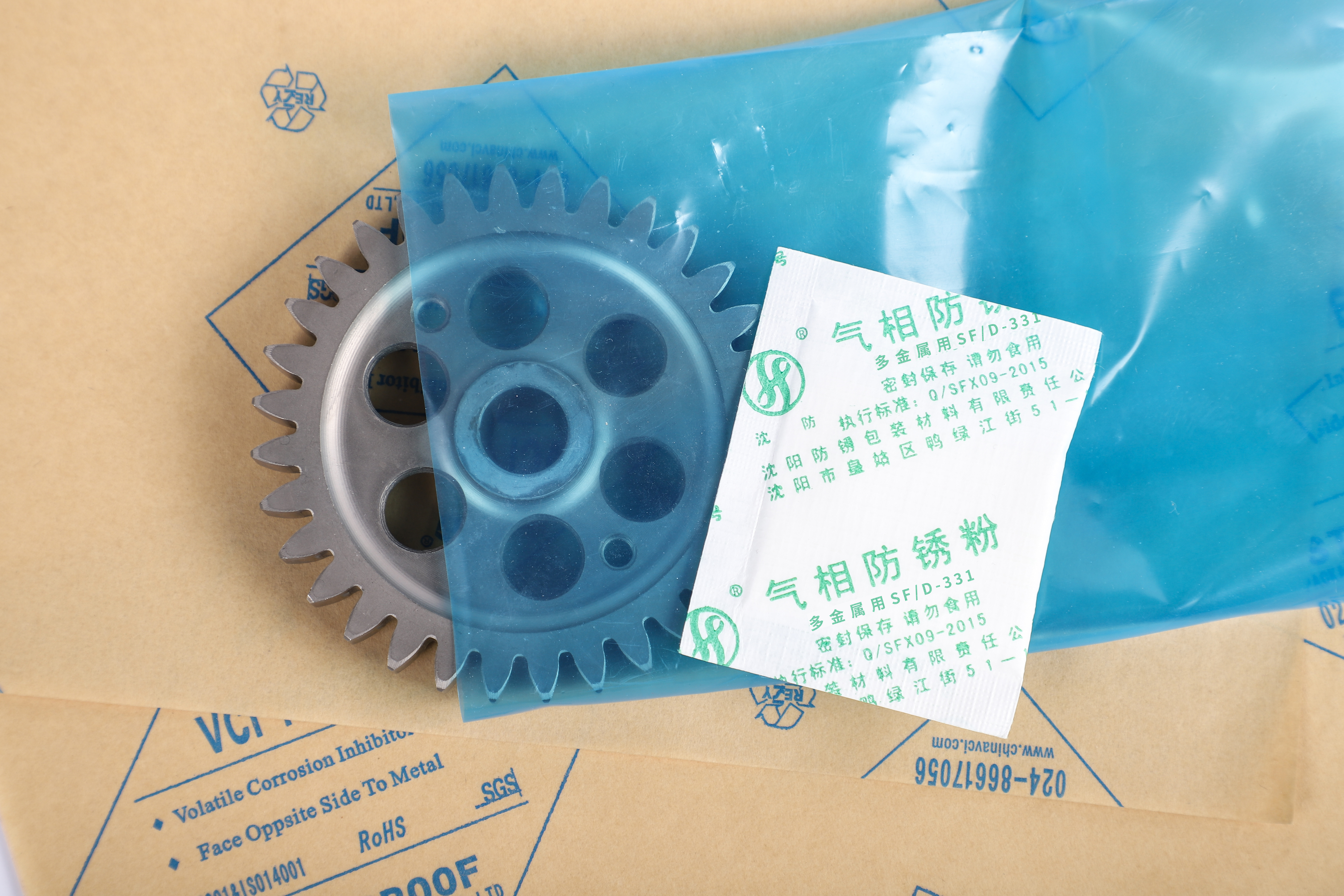
Why is VCI packaging paper more suitable for the Indonesian market?
Faced with Indonesia's high-humidity environment, ordinary packaging paper or plastic bags only provide simple wrapping and cannot truly prevent metal oxidation. VCI rust-preventive paper is different; it is not just a packaging material but also an active rust-prevention technology. After packaging, VCI corrosion-inhibiting molecules continuously volatilize, forming a protective environment within the packaging space and adsorbing onto the metal surface to form an extremely thin molecular protective film. This protective film effectively isolates moisture, oxygen, and corrosive media from the air, significantly reducing the probability of rust even when there is some humidity inside the packaging. Compared to traditional rust-preventive oils, VCI rust-preventive paper is cleaner and typically requires no complex cleaning after unpacking, allowing it to proceed directly to assembly or sales. It is particularly suitable for exporting automotive parts, machine parts, hardware tools, steel, and precision machined components. To meet diverse customer needs, CVCI offers a variety of products, including standard VCI rust-preventive paper, high-strength VCI rust-preventive paper, and Woven Reinforced VCI Paper, and supports customization of sizes, weights, and VCI formulations to better suit practical applications.
Which products are particularly recommended for VCI rust-preventive paper packaging?
In the Indonesian market, automotive parts, construction machinery components, bearings, gears, hydraulic components, molds, steel plates, steel coils, and various hardware tools are the most widely used products for VCI rust-preventive paper. These products are often high-value; if rust occurs during transportation, not only will rework be required, but it may also disrupt the customer's normal production schedule, potentially leading to returns and claims. Therefore, more and more companies are using VCI rust-proof paper for individual wrapping or interlayer isolation of products at the time of shipment, combining it with external packaging to form a more comprehensive protective system. For large equipment or long-cycle sea transport projects, VCI rust-proof paper can be combined with VCI rust-proof film, composite absorbent paper, or container desiccants, depending on the specific circumstances, to further enhance the overall protective effect. Leveraging its extensive product portfolio, CVCI can design more reasonable combination packaging solutions for different types of metal products, helping customers control packaging costs while improving transportation safety and product delivery quality.
CVCI focuses on the research and development and manufacturing of VCI rust-proof packaging materials, offering a complete product series including VCI rust-proof paper, VCI rust-proof film, VCI rust-proof bags, VCI rust-proof liquid, Woven Reinforced VCI Paper, and composite absorbent paper. Our products have been exported to many countries and regions, including Indonesia, Vietnam, Thailand, Malaysia, and Japan, and we can provide customized packaging solutions according to different market and customer needs, establishing a safer and more reliable international transportation protection system for our clients.
Welcome to contact CVCI
If your products are about to be exported to Indonesia or other Southeast Asian countries, please contact CVCI. We will provide you with professional VCI rust-proof paper and comprehensive rust-proof packaging solutions based on your product materials, packaging methods, shipping time, and target market. We also sincerely welcome you to visit the CVCI factory to gain a deeper understanding of our production capabilities, R&D strength, quality management system, and extensive international project experience, so as to jointly create a safer, more efficient, and reliable rust-proof packaging system for metal exports.