



Is VCI Oil Suitable for Protecting Hydraulic Cylinders in Equipment Manufacturing?
2026-03-29 15:28In the equipment manufacturing industry, hydraulic cylinders are almost always core power components. Construction machinery, mining equipment, port machinery, wind power equipment—any system involving heavy-duty motion relies heavily on hydraulic cylinders. Rust spots not only affect the appearance but can also impact seal life and overall machine performance.
Is rust-preventive oil truly suitable for protecting hydraulic cylinders in equipment manufacturing? The answer is yes, but the right type must be chosen, especially for export or long-term storage scenarios. Using a professional VCI Rust Preventive Oil is more reliable.
Why is rust prevention crucial for hydraulic cylinders?
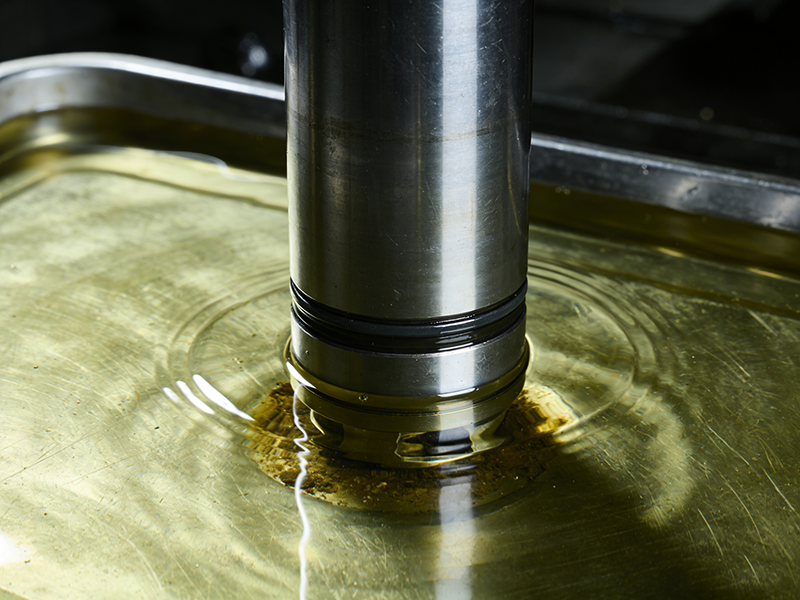
The most sensitive part of a hydraulic cylinder is the piston rod. It typically undergoes precision grinding and chrome plating, resulting in a high surface finish and strict tolerances. Rust spots not only affect the appearance but can also scratch the seals during reciprocating motion, leading to oil leaks or even system failure. Furthermore, hydraulic cylinders are often large and expensive; repair costs are far higher than for ordinary mechanical parts.
Many people believe that hydraulic cylinders, having undergone chrome plating or surface treatment, possess strong corrosion resistance. However, the reality is that chrome plating is not an absolute seal; the microporous structure can still lead to corrosion in humid environments. This is especially true during sea transport, where temperature differences between day and night cause condensation, or when exported to hot and humid regions like Southeast Asia, where the exposed portions of the hydraulic cylinders face even greater risk.
CVCI, in its collaborations with numerous equipment manufacturing clients, has found that truly mature companies incorporate hydraulic cylinder rust prevention into their standard delivery processes, rather than relying on temporary fixes. Because we have long focused on the research and development and production of rust-preventive materials, we can design more suitable protection solutions for different application scenarios.
Why are ordinary protective measures insufficient?
Some companies use simple plastic wrapping or a thin layer of lubricating oil, believing this is sufficient. However, reality often proves that these methods have significant limitations.
The primary function of ordinary lubricating oil is lubrication, not rust prevention. While it may provide some isolation in the short term, the VCI Rust Preventive Oil film is easily damaged or lost during long-term transportation or in high-humidity environments. Secondly, ordinary plastic wrapping only prevents dust accumulation and cannot actively inhibit corrosion. Even with a humid microclimate inside the equipment, corrosion can still occur.
CVCI often encounters similar cases when providing solutions for export clients: equipment arrives at the port with intact outer packaging, but slight rust appears on the piston rod upon disassembly. The cause is often traced back to overly simplistic protective measures. Therefore, single, temporary protective methods cannot truly meet the reliability requirements of the equipment manufacturing industry.
Why choose professional VCI rust inhibitors?
Compared to ordinary oils, the core advantage of VCI rust inhibitors lies in their dual protection. They form a stable oil film and release volatile corrosion-inhibiting molecules, creating a corrosion-inhibiting environment within a localized area. In other words, even if the oil film is locally damaged, the corrosion inhibitors can still function, enhancing overall protective stability.
This multi-layered protection is particularly important for high-value components like hydraulic cylinders. VCI rust inhibitors can evenly cover the piston rod surface without affecting subsequent assembly or use; if necessary, cleaning can be performed according to process requirements, or the equipment can be put into operation directly.
In the development of VCI Rust Preventive Oils, CVCI optimizes oil film thickness, evaporation rate, and adhesion performance for high-precision components such as hydraulic cylinders. We possess stable production capabilities and continuously invest in R&D and testing to ensure consistent product performance under various climatic conditions. It is this long-term accumulation that allows our rust-preventive products to be exported to numerous countries and regions, particularly widely used in the Southeast Asian market.
Real-world validation in maritime transport and high-humidity environments
While laboratory testing is one aspect, real-world transportation environments are the true test. During maritime transport, container rain often occurs inside containers, with condensation dripping onto equipment surfaces. If hydraulic cylinders are not properly protected, rust can easily form in a short period.
In projects exporting to high-humidity regions such as Southeast Asia, CVCI's VCI Rust Preventive Oils have been validated through long-term practical application. Customer feedback shows that under correct usage, hydraulic cylinders maintain good condition even after long-term transportation, significantly reducing after-sales risks.
This application experience is not a one-off event but rather the result of years of market feedback and continuous optimization. We not only provide the material itself but also focus on its performance in real-world environments.
Some companies worry about increased VCI Rust Preventive Oil costs. However, from a holistic supply chain perspective, rust prevention is more like a risk management investment. Once a hydraulic cylinder rusts, the costs of rework, repairs, and even customer claims far outweigh the initial investment in protection.
CVCI, through long-term collaboration with equipment manufacturing companies, has observed a pattern: companies that prioritize the export market place the most emphasis on building robust rust prevention systems. This is because they understand that brand reputation is more important than material costs. Our continuous improvement in production capacity and R&D aims to provide customers with more stable and replicable solutions, rather than one-off product sales.
For hydraulic cylinder protection, professional VCI Rust Preventive Oil is more reliable.
Returning to the initial question, is VCI Rust Preventive Oil suitable for protecting hydraulic cylinders in equipment manufacturing? The answer is yes, but more accurately, it's essential to choose professional VCI Rust Preventive Oil. It not only provides oil film protection but also enhances protective stability through corrosion inhibition mechanisms, making it particularly suitable for export, maritime transport, and high-humidity environments.
For high-value, high-precision hydraulic cylinders, rust prevention is not an add-on but an integral part of delivery quality. Advance planning is more economical and professional than reactive remediation.
Welcome to exchange ideas and visit us!
CVCI has long focused on the research and development and production of rust-preventive materials, exporting its products to many countries and regions. We have extensive experience in applications in hot and humid climates. If you are looking for a more reliable solution for rust protection of hydraulic cylinders or other equipment components, please feel free to contact us to discuss your specific working conditions.
We also sincerely invite you to visit the CVCI factory to learn about our production capabilities, R&D system, and practical application cases. Many rust prevention problems can be significantly reduced by choosing the right methods, allowing your equipment to safely reach destinations worldwide.