



Guide to Anti-rust Packaging for Ship Components
2026-06-11 11:17For the marine industry, maritime transport itself constitutes a highly corrosive environment. Many companies encounter a common problem: components leave the factory in pristine condition, yet after a prolonged sea voyage—and upon arrival at the client's site—they exhibit signs of oxidation, rust spots, or even localized corrosion.
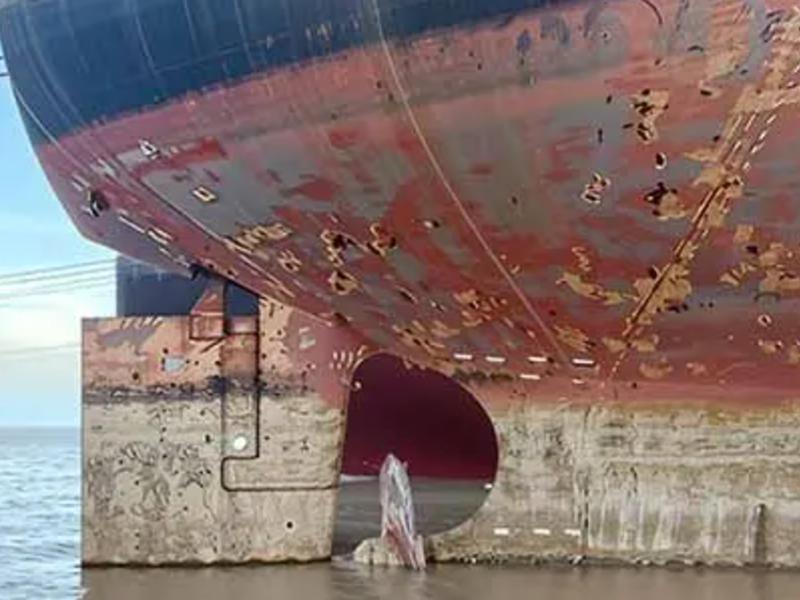
This is particularly critical for high-value marine components—such as flanges, valve bodies, shafts, hydraulic assemblies, and large steel connectors—where surface corrosion not only compromises aesthetics but can also impair assembly precision and long-term operational lifespan. In many instances, the root cause lies not in product manufacturing quality, but rather in a packaging strategy that fails to adequately account for the specific rigors of the maritime environment. For marine components, the greatest adversary during transit is rarely physical impact; it is, invariably, moisture and salt spray.
Why Does the Maritime Environment Accelerate Metal Rusting?
During transit, marine components typically pass through multiple stages: port staging, the actual sea voyage, warehousing at the destination port, and finally, on-site installation. This entire cycle often spans several weeks or even longer. The defining characteristics of the maritime environment are high atmospheric humidity, elevated salinity levels, and significant temperature fluctuations. This is particularly problematic in containerized shipping, where daytime temperature rises followed by nighttime cooling cause atmospheric moisture to condense on the interior surfaces of the container—a phenomenon commonly referred to in the export industry as container rain. Although these minute water droplets may not always be directly visible, they continuously accumulate on metal surfaces, gradually fostering an oxidative environment. Given that many marine components are inherently designed for long-term deployment in harsh marine settings, clients typically impose exceptionally stringent requirements regarding rust prevention. Consequently, should corrosion manifest prematurely during the transit phase, the subsequent costs associated with maintenance and remediation can be prohibitively high.
Why Is Standard Plastic Packaging Ineffective for True Rust Prevention?
Many companies initially opt for standard PE plastic films or simple stretch-wrap packaging; however, these methods provide nothing more than basic physical isolation. The fundamental flaw lies in the fact that standard plastic packaging lacks the capability to actively regulate the internal microenvironment. If moisture is already present within the packaging—or if condensation forms during transit—that moisture becomes effectively sealed in. Over time, this creates a stagnant, humid environment within the package that actually accelerates corrosion. This explains why the exterior packaging of many products may appear entirely intact, yet upon unwrapping, the contents are found to have already begun oxidizing. Particularly in scenarios involving extended maritime transit periods, relying solely on standard plastic packaging is becoming increasingly insufficient.
Why Is VCI Anti Rust Paper the Ideal Solution for Marine Components?
An increasing number of companies exporting marine components are now adopting VCI anti rust paper as their primary protective material. The most distinctive feature of VCI technology is that it does not merely cover the metal; rather, it actively releases corrosion-inhibiting molecules to create a protective micro-environment within the packaging.
VCI packaging paper is typically placed in direct contact with critical metal surfaces, such as:
Machined surfaces;
Flange connections;
Shaft assemblies;
Gear components;
Hydraulic ports;
Spare parts.
It forms a molecular-level protective layer on the metal surface, thereby retarding the oxidation process. Compared to traditional anti-rust oils, VCI anti rust paper is cleaner; it leaves no heavy, greasy residue and does not interfere with subsequent assembly or operation. This is a crucial advantage for marine components that require rapid on-site installation.
The Advantages of VCI Anti Rust Film for Shipping Large Components
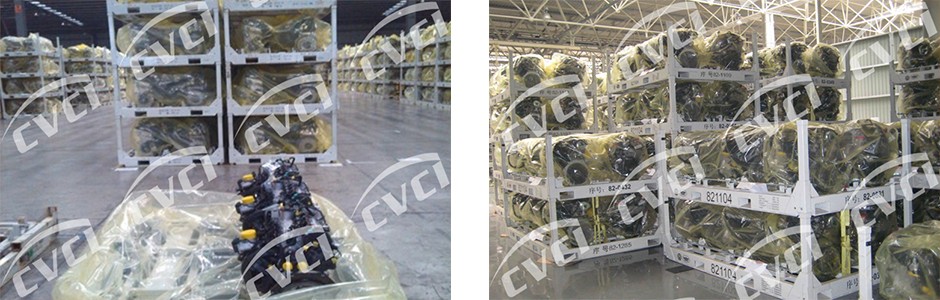
Beyond localized protection, many large marine components are fully wrapped in VCI Film For Steel. This is because, during the maritime transport of large-scale equipment, the greatest risk actually stems from changes in the overall ambient environment. VCI anti rust film not only acts as a barrier against external moisture but also continuously releases anti-rust molecules within the package, thereby establishing a more stable protective environment. This continuous protection proves far more reliable than standard packaging—particularly during long-duration ocean voyages. Many exporting firms have moved away from relying solely on standard PE film, opting instead to utilize VCI anti rust film as their core packaging material; this trend is becoming increasingly pronounced within the marine, offshore equipment, and large-scale steel structure export sectors.
CVCI's Expertise in Anti Corrosion Packaging for Marine Components
In response to the export demands for marine and offshore equipment, CVCI has dedicated significant efforts in recent years to the research and development of VCI anti corrosion packaging systems. Currently, we offer not only a comprehensive range of products—including VCI anti rust paper, VCI anti rust film, and composite moisture-absorbing materials—but also provide holistic packaging design solutions tailored to the specific structure of the client's components, their transit duration, and the environmental conditions of the destination. We place particular emphasis on ensuring long-term stability within actual maritime shipping scenarios—especially for shipments bound for Southeast Asia, the Middle East, or those involving ocean transport—rather than relying solely on short-term laboratory test results. Our products have been successfully exported to numerous countries and regions, allowing us to accumulate extensive practical experience in the anti-corrosion protection of large-scale equipment, steel structures, and marine components.
Contact CVCI
If you are seeking a suitable anti-corrosion packaging solution for the maritime export of marine components, we invite you to contact CVCI. We can provide a highly customized VCI anti corrosion solution that is precisely aligned with your product's structural characteristics, transit schedule, and target market environment. Furthermore, we warmly welcome you to visit our facility to gain an in-depth understanding of our manufacturing capabilities, R&D infrastructure, and real-world application case studies in maritime transport.