



Analysis of Anti Rust Packaging Solutions for PCB Circuit Boards
2026-05-13 09:57In the electronics manufacturing industry, quality requirements for PCBs are becoming increasingly stringent—particularly in sectors such as new energy vehicles, industrial control systems, telecommunications equipment, and consumer electronics—where demands regarding PCB surface condition and soldering stability are already exceptionally rigorous. While many companies maintain excellent control over their production processes, the true issues often emerge during the subsequent stages of warehousing and transportation.
Many PCBs appear to be in perfect condition immediately after production, featuring uniform pad coloration and lustrous copper layers; however, after just a few weeks of storage or a single sea shipment, they begin to exhibit signs of tarnishing, oxidation, or even localized corrosion. Some companies initially attribute these issues to flaws in their production processes, only to later discover that the root cause actually lies in their packaging. This is especially true in high-temperature and high-humidity environments, where the rate of PCB oxidation accelerates far beyond what many people anticipate.
Why do PCBs undergo oxidation?
Although PCBs are classified as electronic products, they fundamentally incorporate a significant amount of metallic structure. Areas such as copper layers, solder pads, connection terminals, and "gold fingers" are directly exposed to the surrounding atmosphere. Once airborne moisture, oxygen, or contaminants adhere to these metallic surfaces, a gradual oxidation reaction begins to take place. In many instances, this oxidation does not immediately escalate into severe corrosion; instead, it initially manifests as discoloration, surface tarnishing, or a degradation in soldering performance. However, within the electronics industry, even minor oxidation can compromise subsequent SMT assembly processes, solder adhesion, and the long-term stability of the final product. PCBs are particularly susceptible to environmental degradation during sea freight exports, prolonged storage periods, or when situated in high-temperature, high-humidity regions such as Southeast Asia. Many of the issues reported by customers are not, in fact, the result of manufacturing defects in the PCBs themselves, but rather stem from a failure to establish a stable, protective environment during the packaging stage.
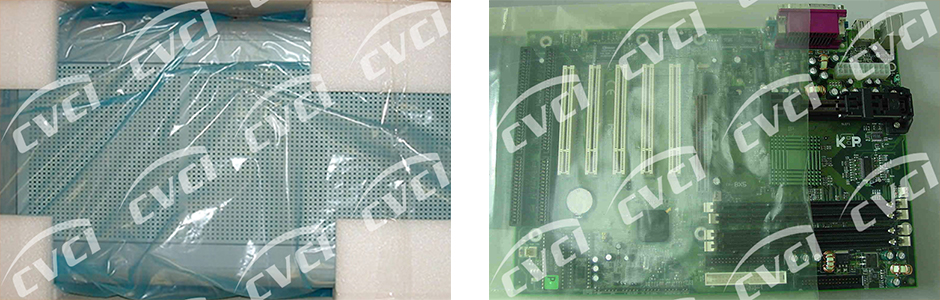
Why are ordinary plastic bags ineffective at truly preventing oxidation?
Currently, a considerable number of companies still rely on standard PE plastic bags or simple vacuum packaging to store their PCBs. However, these methods provide only physical isolation and fail to actively prevent oxidation. If residual moisture remains trapped inside the packaging, or if condensation forms during transit due to temperature fluctuations, the PCBs remain vulnerable to gradual oxidation—even if the packaging is hermetically sealed. This is particularly relevant regarding the "container rain" phenomenon frequently encountered during sea freight: as temperatures rise during the day and drop at night, atmospheric moisture within the container condenses into tiny water droplets inside the packaging—a scenario against which standard plastic packaging offers virtually no protection. The discoloration of solder pads and the tarnishing of metallic areas observed in many PCB products following transit are, in fact, directly linked to this specific environmental challenge. The Practical Efficacy of VCI Anti Rust Film in PCB Packaging
The role of VCI anti rust film in PCB packaging extends far beyond mere physical coverage; it serves to establish a more stable micro-environment. Once a PCB is wrapped in VCI anti rust film, VCI molecules continuously interact with the metal surfaces, forming an invisible protective layer. This protective layer effectively slows down the rate of oxidation, thereby mitigating the risks of solder pad discoloration, copper layer oxidation, and corrosion in connection areas. The advantages of vci plastic anti rust film become particularly pronounced during long-term storage and international shipping. Unlike standard packaging—which merely passively isolates the contents from the air—VCI materials actively and continuously provide protective coverage. For maritime exports, in particular, this long-term stability is absolutely critical.
CVCI's Anti-Oxidation Packaging Solutions for PCBs
In response to the electronics industry's stringent requirements for oxidation prevention, CVCI has, in recent years, continuously intensified its R&D and application efforts regarding VCI anti-rust materials for PCBs and precision electronic components. We offer not only standard vci plastic anti rust films but also fully customized solutions tailored to specific client product types, packaging structures, and shipping environments—including optimizations regarding film thickness, dimensions, and packaging methods. Leveraging our robust production capabilities and extensive experience in international exports, we possess a deep understanding of the risks associated with transporting PCBs through high-humidity environments—such as those found in Southeast Asia—enabling us to assist clients in developing highly reliable packaging strategies. Our objective is not merely to supply materials, but to empower our clients to genuinely minimize the risk of oxidation during both transit and storage.
Does your product require VCI rust-proof packaging?
CVCI - a professional VCI rust-proof packaging manufacturer, protecting your products
Contact Us Today to request our latest B2B price list and apply for a Commercial Sample.Contact CVCI for PCB Anti Oxidation Solutions
If you are seeking anti-oxidation packaging solutions for PCB circuit boards, electronic connectors, or precision electronic components, we invite you to contact CVCI. We can provide vci plastic anti rust film solutions that are precisely tailored to your specific product structure, transportation method, and storage duration requirements. Furthermore, we warmly welcome you to visit our facility to gain a firsthand understanding of our production capabilities, R&D infrastructure, and real-world application case studies.