


How to Prevent Equipment Parts from Rusting During Sea Transport?
2026-01-30 13:44Anyone involved in equipment export, especially via sea freight, will almost certainly encounter a common problem:
The goods leave the factory in perfect condition, but upon arrival at the customer's location, they are found to be rusted when the boxes are opened.
Often, the problem isn't the product quality itself, but the transportation environment. Sea freight involves long transit times and complex conditions, and uncontrolled humidity inside the container can easily cause metal parts to rust during transit. This article will address this issue, starting with the most common and easily overlooked risk points, and explain how to prevent rust on equipment parts during sea transport.
Why is rust prevention essential for equipment parts during sea transport?
Equipment parts are mostly made of steel, castings, and machined parts, with high surface precision and strict tolerance requirements, making them highly susceptible to corrosion.
Sea freight, however, is a high-humidity, long-duration transportation method with many uncontrollable factors.
Especially for exports to Southeast Asia, high temperature and high humidity are commonplace. A single sea voyage can take three to four weeks, and involves port loading and unloading, and significant day-night temperature fluctuations. If the parts are not properly protected against rust beforehand, the rework and communication costs will be very high when the customer discovers the problem upon unpacking.
Through its collaboration with numerous export clients, CVCI has found that truly mature companies don't wait until the product rusts to address the problem; instead, they design rust prevention as an integral part of packaging and delivery before the goods leave the factory.
The most easily overlooked risk in sea freight: Container Rain
When discussing rust prevention in sea freight, one key term is unavoidable – container rain.
Container rain isn't actual rain, but rather the condensation of water vapor inside the container during sea transport. Due to day-night temperature differences and moisture entering the container, water vapor condenses on the container's ceiling and walls, then drips onto the cargo like rain.
This type of condensation often occurs repeatedly and continuously. Once water droplets land on exposed or inadequately protected metal parts, rust spots quickly form.
Even if the outer packaging appears intact, the internal parts may have already secretly begun to rust.
When developing rust prevention solutions, CVCI pays particular attention to this invisible but frequently occurring environmental risk, rather than just relying on laboratory data.
How to prevent rust inside a container? The First Line of Defense: Water-Absorbing Granules
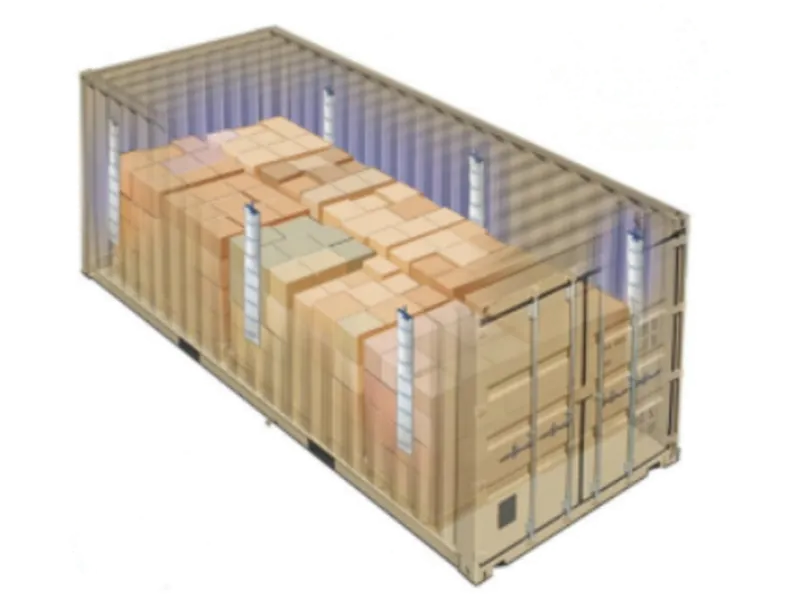
For the problem of condensation inside shipping containers, the first effective line of defense is usually the use of water-absorbing granules (desiccants) in the container.
The function of water-absorbing granules is straightforward:
They reduce the overall humidity inside the container, reducing the conditions for condensation formation.
In practical applications, water-absorbing granules are usually fixed to the inner wall or ceiling of the container, continuously absorbing moisture and preventing moisture accumulation inside the container. For long-distance sea transport, especially for equipment parts exported to Southeast Asia, this step is almost standard practice.
When providing overall anti-corrosion solutions to customers, CVCI recommends the appropriate amount of water-absorbing granules based on the container size, transportation cycle, and destination climate, rather than simply using excessive amounts.
The Key Line of Defense for the Parts Themselves: VCI Anti-Corrosion Film Wrapping
In the field of anti-corrosion for equipment parts, VCI anti-corrosion film is a very mature and widely proven method.
The advantage of VCI anti-corrosion film is that it doesn't simply isolate from the air, but rather creates a micro-environment that inhibits corrosion within the packaging by releasing vapor-phase corrosion inhibitor molecules from the material.
These molecules actively adsorb onto the metal surface, blocking moisture and oxygen from corroding the metal.
For equipment parts, wrapping individual parts or entire sets with VCI anti-corrosion film can effectively protect critical areas without affecting subsequent assembly and without requiring cleaning, significantly reducing operating costs.
In the production of VCI anti-corrosion film, CVCI provides solutions with different thicknesses and formulations based on different part sizes, materials, and export cycles. This is one of the important reasons why we continue to cooperate in the Southeast Asian market.
Multi-Layer Anti-Corrosion Protection
If sea transport anti-corrosion is considered an insurance policy, then multi-layer anti-corrosion is the truly reliable solution.
In actual projects, a relatively mature and stable combination is usually:
Using water-absorbing granules inside the container to control overall humidity
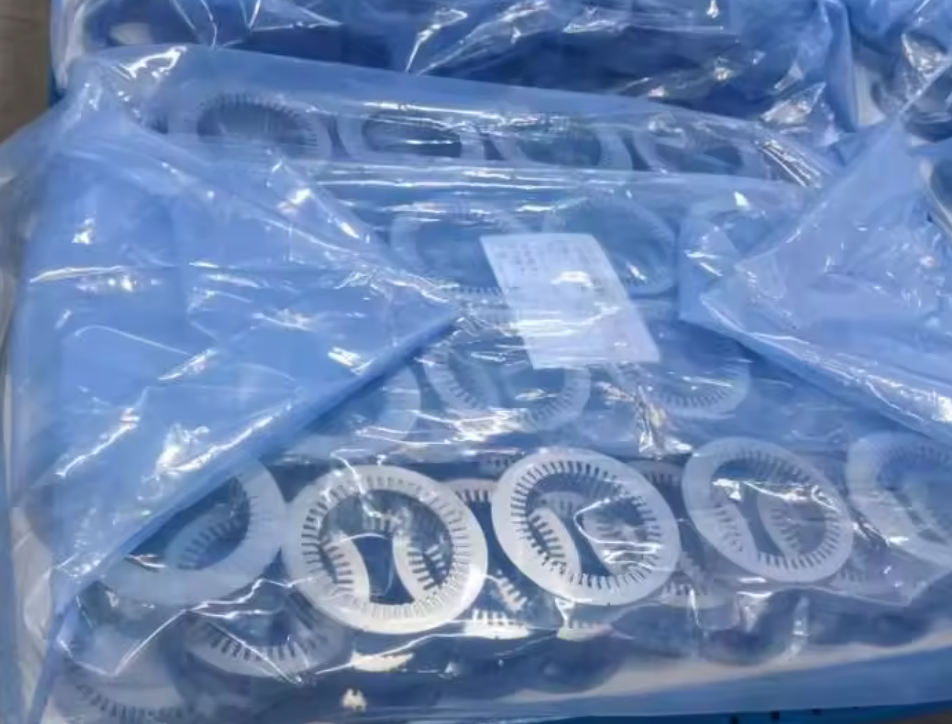
Individually wrapping the parts with VCI anti-corrosion film
If necessary, supplementing with anti-corrosion bags, liners, or protective trays
This combination addresses both container condensation and protects the surface of the parts, maintaining good stability even if the transportation cycle is extended.
In long-term export projects, CVCI has helped customers significantly reduce the rate of sea transport corrosion complaints through this systematic approach.
About CVCI
CVCI has long focused on the research and development and production of anti-corrosion materials, and its products are exported to many countries and regions, with extensive application experience in the Southeast Asian market. We pay more attention to the performance of anti-corrosion solutions in real maritime transportation environments, rather than just focusing on theoretical parameters. If you are troubled by equipment parts export, anti-corrosion packaging, or maritime risk control, please feel free to contact us for discussion. You are also welcome to visit the CVCI factory to see our production capabilities, R&D processes, and real-world application cases.