



Will VCI Anti Rust Oil Affect the Cleanliness of Aerospace Equipment?
2026-04-01 15:57Aerospace equipment has extremely high requirements for cleanliness, assembly precision, and material compatibility. Will VCI anti rust oil become a burden on later cleaning and assembly? The key lies in the type of VCI anti rust oil used and the overall protection plan designed. Especially when using professional VCI anti rust oil, under the correct process, it will not only not affect later cleaning and assembly, but will also provide safer and more reliable storage and transportation protection for aerospace equipment.
Why does aerospace equipment also need rust prevention?
Many people think that aerospace equipment is manufactured in a highly controlled environment, so how could it rust? Aerospace components do not immediately enter the final assembly stage after processing. There may be turnover, warehousing, cross-regional transportation, and even international collaboration. As long as there are exposed metal surfaces, the risk of corrosion always exists.
Especially for precision-machined parts, structural parts, connectors, and hydraulic system components, the surface condition requirements are often extremely high. Even slight oxidation can affect the subsequent fitting precision. Aerospace equipment utilizes a diverse range of materials, including high-strength alloy steel, aluminum alloys, and titanium alloys, each exhibiting different corrosion behaviors under varying environmental conditions.
CVCI, through years of providing protection solutions to high-end manufacturing clients, has observed that industries with stringent quality requirements are particularly attentive to rust prevention during storage and transportation. We have long focused on the research and development and production of rust-preventive materials, enabling us to optimize formulations based on the characteristics of different metals and ensure stable product performance under complex environments through continuous testing.
Why might ordinary VCI anti rust oils affect subsequent cleaning?
Traditional VCI anti rust oils often produce a thick film with noticeable residue. Some oils contain high-viscosity base oils or additives, resulting in high cleaning costs. Incomplete cleaning can indeed affect assembly precision or cleanliness levels.
Aerospace equipment has stringent cleanliness standards. If rust-preventive materials are difficult to remove, it increases cleaning time and may even introduce risks. Therefore, the selection of rust-preventive materials is particularly crucial in this field.
CVCI places great emphasis on oil film controllability and cleanability during its R&D process. By adjusting the base oil system and the proportion of corrosion inhibitors, it ensures that the VCI anti rust oil possesses both reliable protective performance and can be easily removed through standard cleaning processes. This balance is a crucial threshold for rust-preventive products to enter the high-end manufacturing sector.
Why are professional VCI anti rust oils more suitable for high-end equipment?
The core advantage of VCI anti rust oils lies in their dual protection mechanism of oil film + vapor phase corrosion inhibition. It not only forms a uniform oil film on the metal surface but also establishes a corrosion-inhibiting microenvironment within a localized space through volatile corrosion inhibitors. This ensures stable protective effects even with a thin oil film.
For aerospace equipment, a thin and uniform oil film means easier control over residue and easier cleaning without sacrificing rust prevention. This dual protection significantly reduces the risk of rust, especially during long-term storage or cross-regional transportation.
CVCI has continuously improved its production capacity and R&D system over the years, developing various specifications of VCI anti rust oils for different application scenarios and continuously validating their effectiveness in the export market. Our products have been exported to numerous countries and regions, receiving particularly positive feedback on their stable application in the high-temperature and high-humidity environments of Southeast Asia. These real-world examples provide reliable evidence of our products' performance in complex environments.
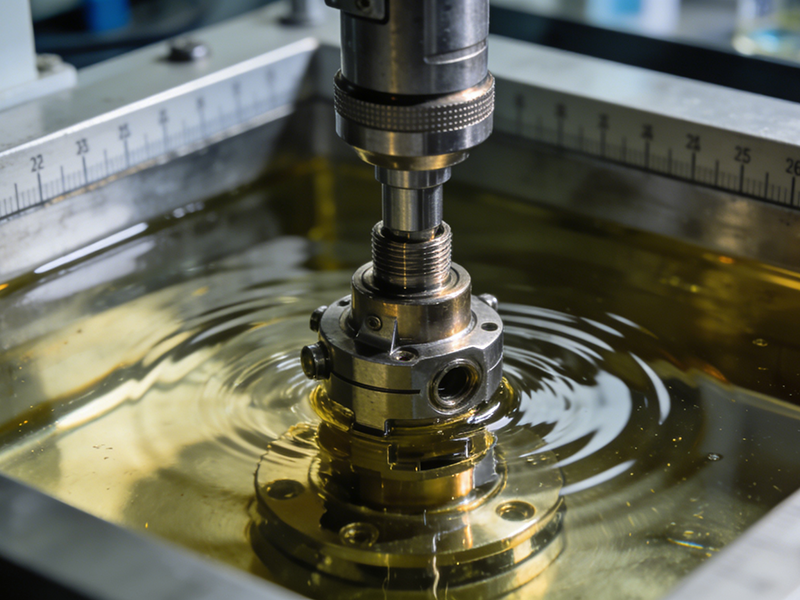
Challenges of High Humidity Environments and Long-Term Storage
While aerospace components are manufactured in controlled environments, they may still face temperature variations and humidity fluctuations during transportation and transshipment. This is especially true during cross-regional collaborations or export shipments, where uncontrollable environmental factors increase. In high-humidity environments, even short-term exposure can lead to initial oxidation points on metal surfaces.
In such cases, relying solely on desiccants or sealed packaging is often insufficient. VCI rust inhibitors provide active protection to the parts' surfaces, reducing reliance on complete environmental control. In actual projects, CVCI recommends appropriate oil film thickness and cleaning methods based on storage periods, environmental levels, and cleaning requirements, ensuring smooth subsequent assembly.
References
This article is based on principles of metal corrosion control, vapor phase corrosion inhibition technology, and long-term export application experience. Related technical principles can be found in corrosion control engineering theory and vapor phase corrosion inhibition material research literature, as well as storage and transportation protection specifications for high-end manufacturing industries.
Welcome to exchange ideas and visit us
CVCI has long been focused on the research and development and production of rust-preventive materials, continuously improving its production capacity and technological innovation. Our products are exported to many countries and regions, and we have accumulated rich experience in applications in humid and hot environments. If you are looking for a more reliable solution for the storage and transportation protection of high-end equipment or precision components, please feel free to contact us to discuss your specific needs.
We also sincerely invite you to visit the CVCI factory to learn about our R&D system, production processes, and application cases. Rust prevention may seem like a detail, but it directly relates to equipment quality and brand reputation. Choosing the right solution reduces unnecessary risks for the future.