



Will Using Vci Rust Inhibitor Affect Subsequent Assembly?
2025-12-03 11:31In manufacturing, rust prevention is almost indispensable whenever steel, castings, or machined parts are involved. Especially in export, long-distance transportation, sea freight, and humid storage scenarios, parts rust much faster than expected if surface protection isn't applied beforehand. Many companies use VCI rust inhibitors, but precisely because of this, "Will applying rust inhibitors affect assembly?" has become a primary concern for engineers. CVCI, from a professional manufacturer's perspective, systematically explains this issue from basic principles and application scenarios to product effects, providing practical references based on our real-world export cases to several Southeast Asian countries.
Why the concern about potential impact?
The worry that China concentrated VCI oil will affect assembly isn't "overthinking." Many processes are extremely sensitive to surface conditions. For surfaces like mating surfaces, bearing seats, sealing surfaces, threads, tooth surfaces, and precision holes, even a slightly thicker residual oil film can lead to changes in fit accuracy, inaccurate preload torque, and even affect subsequent processes like painting, electroplating, and bonding. In other words, engineers aren't worried about China concentrated VCI oil itself, but rather the uncontrollable consequences of China concentrated VCI oil residue in subsequent processes.
Furthermore, different companies have different cleanliness requirements. Some factories can accept a light oil film, while others require complete degreasing; some materials are sensitive to oil (such as some electrical components and rubber seals), and slight improper handling can cause aging or swelling. Therefore, whether China concentrated VCI oil affects subsequent assembly fundamentally depends on the type of China concentrated VCI oil you choose, your requirements for the subsequent processes of the parts, and whether you have implemented necessary process controls.
Types of VCI oil on the market can be roughly divided into three categories: evaporable, no-wash, and heavy-duty protective. The biggest feature of evaporable VCI oil is its very thin surface oil film and minimal residue. After application, most of the carrier evaporates within a period of time, leaving only a very thin layer of corrosion inhibitor, making it ideal for situations where assembly is required without cleaning. No-wash VCI oil falls between "light protection" and "direct assembly," offering greater assurance, but for extremely high-precision assembly, simple degreasing is usually still recommended. Heavy-duty protective VCI oil is a product with "strong surface protection but also noticeable residue," typically used for large castings, outdoor equipment, and long-term storage.
Therefore, whether rust-preventive oil affects assembly is not a VCI issue, but rather whether the formula is suitable for your subsequent processes. In this regard, feedback from our customers exporting to Vietnam, Malaysia, and the Philippines is consistent: as long as the correct model is selected and used according to the process, VCI oil will not cause assembly problems.
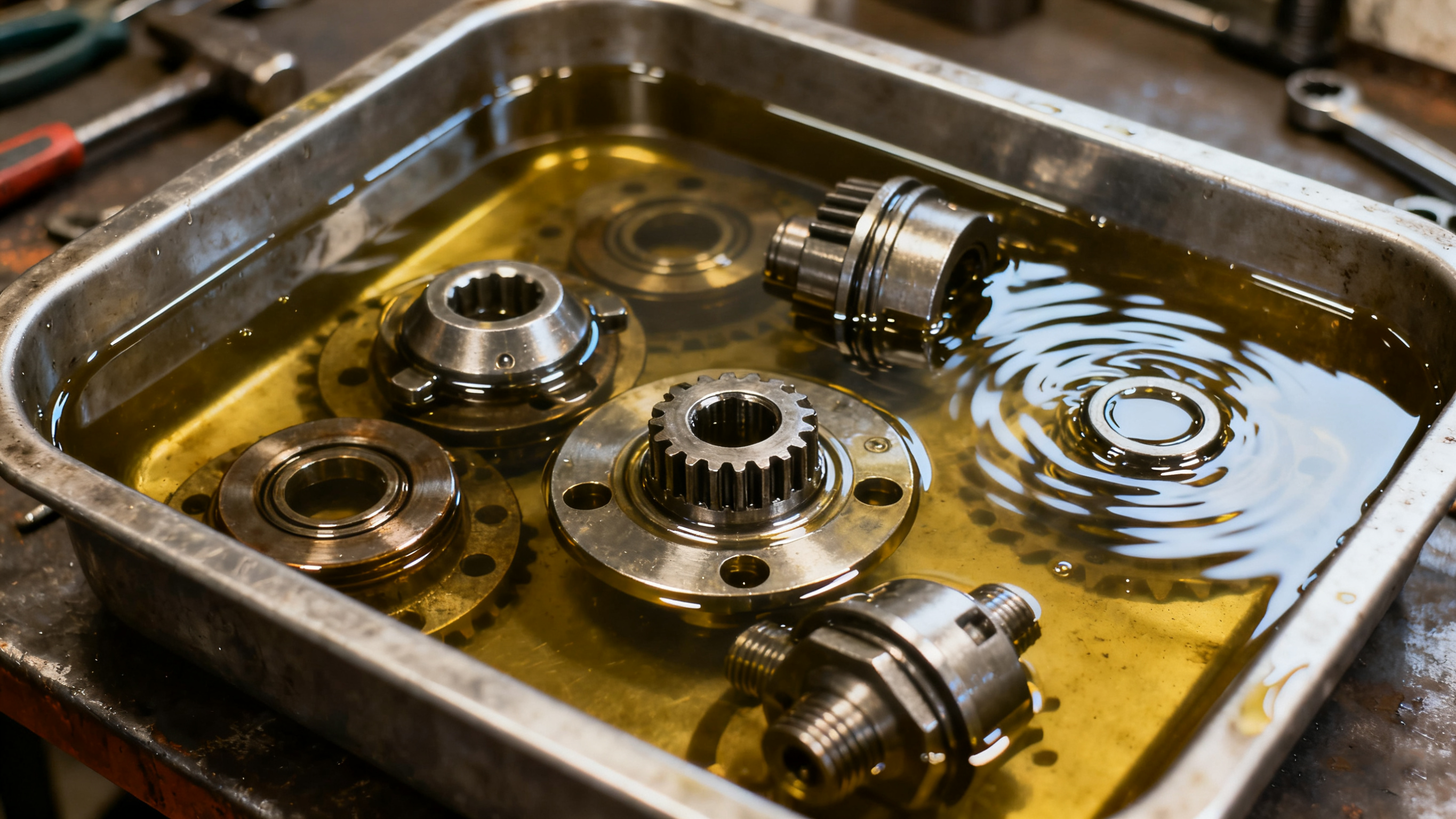
What impact does VCI oil residue have on subsequent processes?
1. Mechanical Fit and Dimensional Accuracy
When parts are press-fitted or slide-fitted, the presence of an oil film on the surface can cause the fit dimensions to be "too large or too tight," resulting in assembly forces deviating from expectations. Therefore, some precision parts typically use low-residue, evaporable VCI oil to reduce the impact of the oil film from the source. Factories with more stringent requirements will add a rapid degreasing process before assembly to keep the mating surfaces "clean but not exposed for too long."
2. Thread Torque and Preload
An oil film reduces the coefficient of friction, making the torque "inaccurate." If you calculate the torque based on a "dry state" when tightening bolts, but the actual contact surface has an oil film, the preload will be greater than expected, potentially leading to stripping or damage. Common factory practices include either thoroughly cleaning before tightening or establishing a "torque standard for oil-containing conditions," both of which effectively avoid errors.
3. Painting, Electroplating, and Welding
Any process requiring adhesion can pose a risk if there is residue from rust-preventive oil, cutting fluid, or lubricating oil. Slight residue can cause coating blistering, and in severe cases, even complete peeling. Therefore, all parts before painting/electroplating should undergo cleaning and surface pretreatment, regardless of whether VCI oil is used; this is a mandatory requirement.
4. Rubber Seals and Electronic Modules
Some oils can cause rubber to swell and age, or make electronic modules sensitive. Therefore, parts involving seals, sensors, or electronic components typically employ "area protection," using rust-preventive oil only on metal parts, while sensitive areas are sealed with VCI membranes or vapor phase bags. This approach is very common in Southeast Asian customer cases.
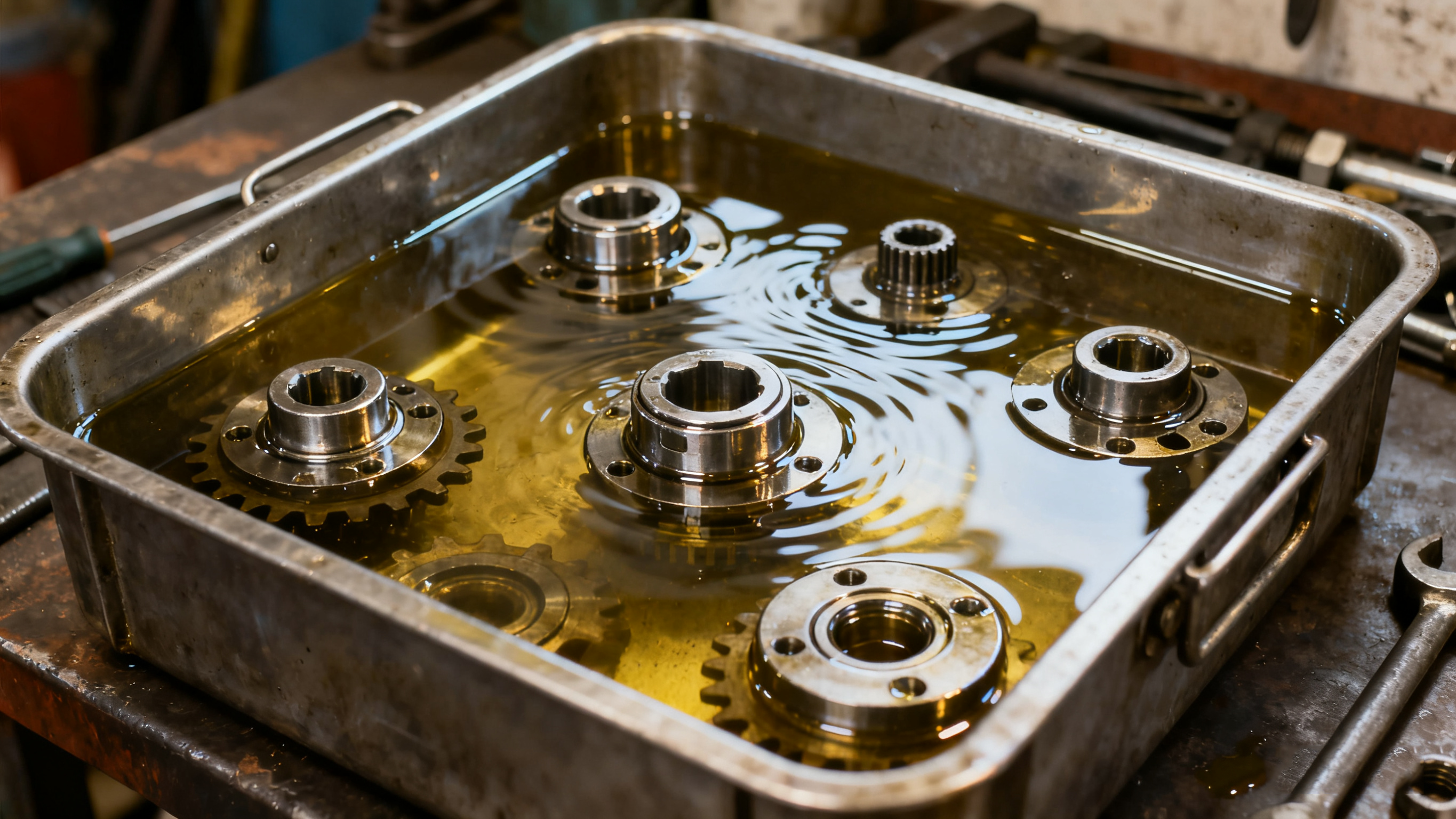
Process Control and Quality Assurance (SOP)
Establishing a standardized process flow is a very effective way for companies to completely avoid the impact of VCI oil on assembly. This typically includes:
Selecting rust-preventive oils by part category: tiered management of assemblies, painted parts, export parts, and long-term storage parts.
Controlling coating amount: More is not always better; a thin layer of China concentrated VCI oil is optimal.
Setting up cleaning procedures: parts to be assembled should be quickly degreased or wiped with solvent before assembly.
Torque Calibration: Torque tables are developed for both oil-containing and oil-free conditions.
Sampling and Surface Inspection: Residue is checked using oil testing paper, a contact angle meter, or a solvent wiping method.
Product Compatibility Recording: Especially for export customers who are more sensitive to chemical composition, obtaining data in advance is essential.
These procedures are very common in our cooperation with Southeast Asian customers and have proven to be very effective.
Real Feedback from Southeast Asian Customers
Manufacturing industries in Vietnam, Malaysia, and the Philippines generally face environments with high humidity, high salinity, and unstable storage conditions. Therefore, many factories must immediately apply rust prevention treatment to parts after they come off the production line; otherwise, micro-rust may appear within hours. Most of our customers use a combination of China concentrated VCI oil + VCI rust-preventive film for sealed packaging. This not only covers the surface but also utilizes vapor molecules to form a secondary protection, with minimal impact on subsequent assembly.
Some other customer practices are more representative: Precision automotive parts factories choose China concentrated VCI oil to protect parts during transportation, but by the time they enter the assembly line, the oil film has mostly evaporated, requiring only a simple wipe before entering the workstation. Some manufacturers that require spraying clean all parts centrally, ensuring more controllable cleanliness and preventing the oil film from becoming a hazard. These examples demonstrate that as long as the appropriate China concentrated VCI oil is selected and the process is followed, it is entirely possible to achieve rust prevention without affecting assembly.
Whether China concentrated VCI oil has an impact depends on how it is used. If low-residue, compatible with the process, used in controlled quantities, and properly cleaned before assembly, China concentrated VCI oil will generally not pose an assembly risk. Conversely, it allows parts to safely withstand high humidity environments during transportation, storage, and sea freight, avoiding cost losses due to rust.
CVCI produces various types of China concentrated VCI oil and VCI anti-rust films, VCI bags, container desiccants, and other anti-corrosion products, which have been exported to Vietnam, Malaysia, Indonesia, the Philippines, and other countries, and are used in multiple industries including automotive, machining, tool manufacturing, and shipping equipment. Whether you are considering which rust prevention solution to choose or want a customized formula based on your parts' process, we are happy to provide you with professional advice based on the on-site situation. If you have the opportunity, you are also very welcome to visit our factory, where we can demonstrate our complete rust prevention packaging process and actual test results.