



Rust Prevention Solutions for Long-Term Storage of CNC Machined Parts
2026-05-09 17:24Why are CNC machined parts particularly prone to rust?
The biggest difference between CNC machined parts and ordinary steel lies in their surface condition. Parts that have undergone precision machining typically have smoother surfaces and higher precision, meaning more exposed metal. Once moisture, oxygen, or salt in the air comes into contact with the metal surface, oxidation easily occurs. Many machined parts come into contact with cutting fluid, hand sweat, dust, and other contaminants during the cutting process. If subsequent cleaning is inadequate, these residues will further accelerate corrosion. Especially in hot and humid environments such as southern regions or Southeast Asia, even if the warehouse appears dry, the air humidity is sufficient for the metal to slowly oxidize. This is why many export companies place particular emphasis on rust prevention during storage.
Why is long-term storage more difficult to protect against than short-term transportation?
Short-term transportation typically lasts only a few days to a few weeks, while long-term storage can last for months or even more than a year. Over time, many previously insignificant problems become amplified. For example, the condensation problem caused by the temperature difference between day and night in the warehouse. High daytime temperatures followed by nighttime cooling cause moisture in the air to form a fine film of water on metal surfaces. This film, invisible to the naked eye, is enough to cause corrosion. Warehouses are not always completely sealed; airflow, humidity, and aging packaging all affect the protective effect. While ordinary plastic bags may seem to isolate the metal from the air, they actually trap moisture inside. For long-term storage, the truly effective solution is not simply wrapping the metal, but creating a stable rust-proof environment.
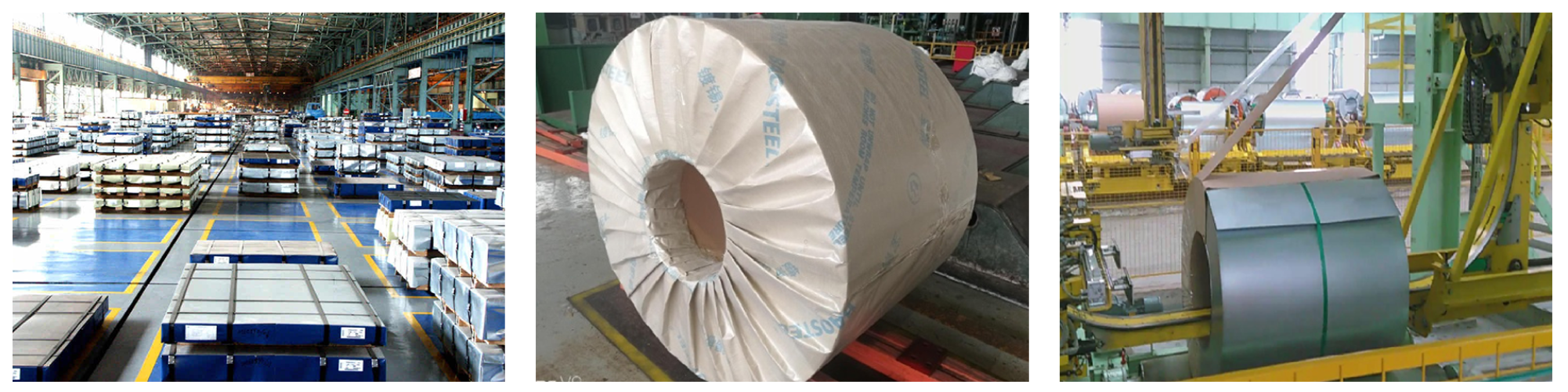
Why are more and more companies using VCI rust-proofing materials?
Compared to traditional rust-preventive oils, VCI rust-proofing materials have become increasingly widely used in the machining industry in recent years. The principle of VCI is not complicated. The corrosion-inhibiting molecules in the material are slowly released and adhere to the metal surface in a sealed space, forming a protective layer invisible to the naked eye, thus slowing down oxidation and corrosion. For CNC machined parts, the biggest advantage of this method is that it does not affect subsequent use. Many parts do not want to have thick layers of oil stains before assembly, and VCI rust-proof films and VCI packaging papers can maintain rust prevention while reducing subsequent cleaning burden. Especially for high-precision parts, export parts, or components awaiting assembly, VCI (Vacuum-Insulated Clothing) solutions are more convenient.
Common Long-Term Rust Prevention Solutions for CNC Machined Parts
The most mature solutions in the industry typically combine cleaning, VCI packaging, and warehouse control. After machining, cutting fluid, fingerprints, and impurities must first be removed, as these residues are often the starting point for rust. Then, depending on the part's structure and storage period, VCI Anti Static Film or VCI packaging paper is chosen for wrapping. For small to medium-sized precision parts, VCI rust-proof bags are common; while for large parts or bulk pallet packaging, VCI Anti Static Film is more often used for overall coverage. If the storage period is particularly long, or the warehouse humidity is high, desiccants can be used in conjunction to further reduce the risk of moisture.
Why are ordinary plastic bags not recommended for long-term use?
Many factories use PE plastic bags directly to package machined parts to save costs. However, ordinary plastic bags do not actually have rust-proof functions. They can only isolate, not actively protect. Once moisture enters the bag, it easily creates a closed, damp environment, which actually accelerates corrosion. The difference with VCI Anti Static Film lies in its ability to not only provide physical packaging but also actively release anti-rust molecules. This explains why the two materials look similar but have significantly different actual effects.
CVCI's Long-Term Storage Anti-Rust Solutions
For the long-term storage needs of CNC machined parts, CVCI has provided mature VCI anti-rust packaging solutions for clients in various industries, including automotive parts, construction machinery, hydraulic systems, and export equipment. We offer standard products such as VCI Anti Static Film, VCI packaging paper, and anti-rust bags, and also support customization based on customer part sizes, storage cycles, and transportation environments. Especially for high-temperature and high-humidity markets like Southeast Asia, we have accumulated extensive application experience through long-term export, enabling us to help customers choose material structures and packaging methods more rationally. CVCI continuously invests in R&D and production capacity building to ensure the stable performance of products in long-term storage and transportation environments, going beyond just laboratory testing.
Contact CVCI for Solutions
If you are looking for a suitable anti-rust solution for the long-term storage of CNC machined parts, please contact CVCI. We can provide more suitable VCI rust-proof packaging recommendations based on your product type, warehousing cycle, and transportation environment. We also welcome you to visit our factory to gain a deeper understanding of our production capabilities, R&D system, and practical application cases. We aim to not only provide products, but also help our customers truly reduce the risk of rust during long-term storage.