

How does Woven Reinforced VCI Paper achieve long-term protection?
2026-04-08 15:46Normal anti-rust paper is good for just wrapping and protecting small/lightweight parts. But if we talk about heavy products -steel coils and plates- which are not only heavy but have sharp edges and long transportation times, then normal anti-rust paper cannot resist such conditions and will break and fail to protect. So, Woven Reinforced VCI Paper is a better choice.
Why is Packaging for Heavy Steel Materials More Prone to Problems?
Many people underestimate the complexities involved in transporting steel. Steel coils and plates are not only massive in weight, but they also undergo significant compression, friction, and even impact during loading, unloading, and transit. If the packaging material lacks sufficient strength, it can easily be torn or punctured during transportation. Once the packaging is compromised, the anti-rust system fails; air and moisture ingress, causing the metal surface to rapidly begin oxidizing. This risk is further amplified during maritime shipping, particularly when exposed to high-humidity environments or "container rain" (condensation). Through years of serving steel export clients, CVCI has observed that many instances of corrosion are not attributable to defects in the anti-rust material itself, but rather to insufficient packaging strength leading to a breakdown in protection. Consequently, simply enhancing anti-rust capabilities is insufficient; the structural strength of the packaging must be simultaneously improved. This remains one of the key focal points of our ongoing research and development efforts.
What is Woven Reinforced VCI Paper?
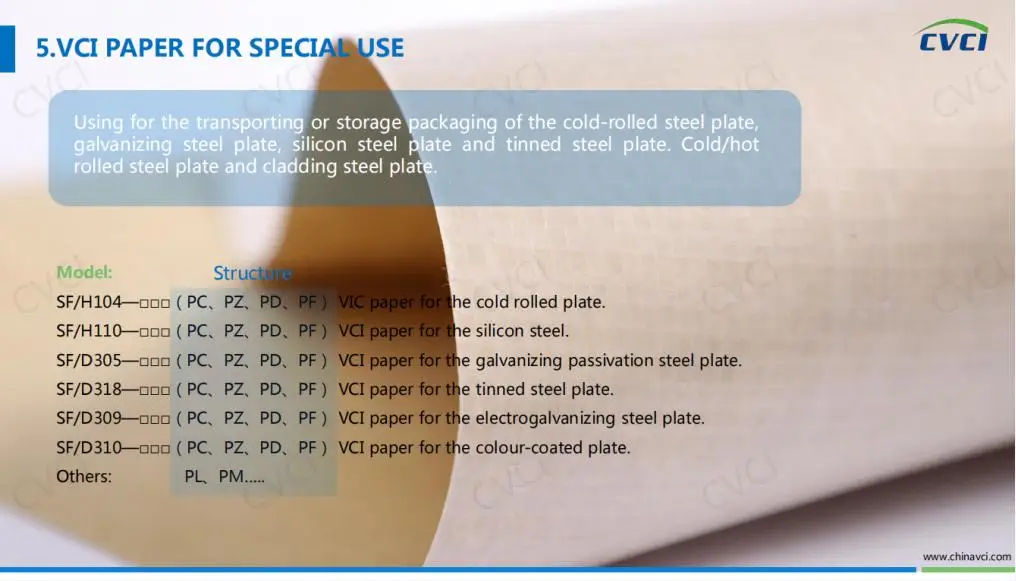
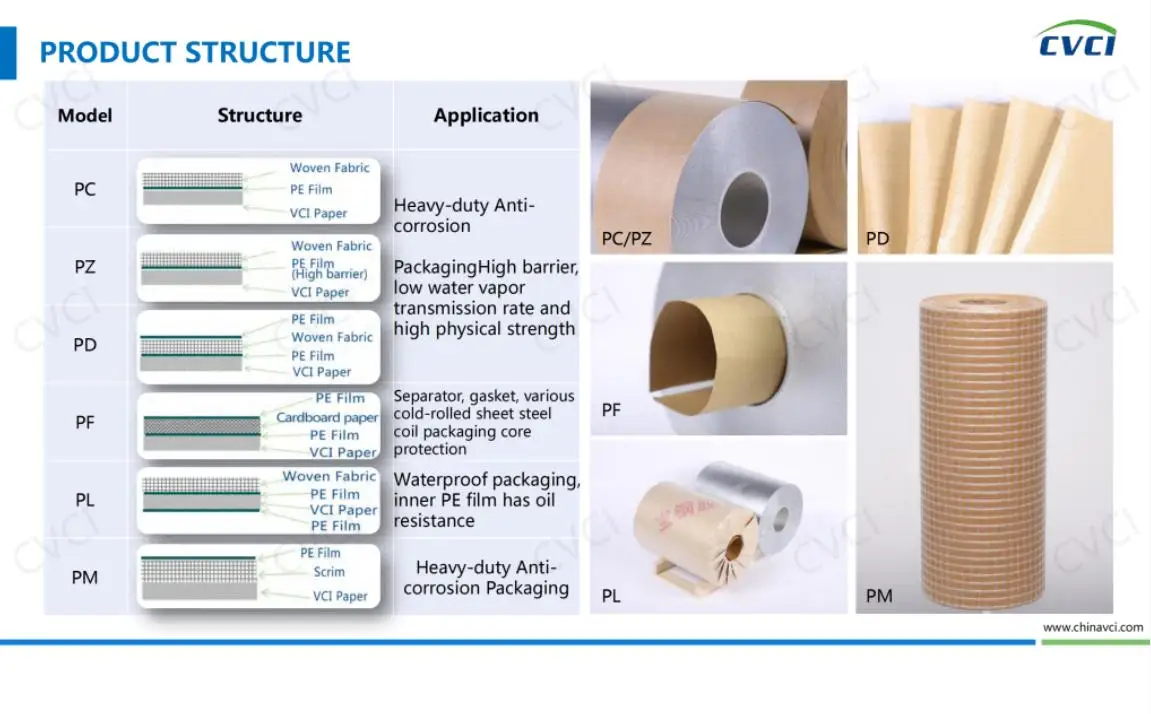
It is an advanced material built upon traditional VCI anti-rust paper, featuring the addition of a woven reinforcement layer. This structural enhancement endows the material with not only anti-rust functionality but also the robust physical strength typically associated with industrial-grade packaging materials. CVCI’s Woven Reinforced VCI Paper for steel packaging employs a multi-layer composite structure that significantly boosts mechanical performance while simultaneously guaranteeing effective anti-rust protection.
Specifically:
Its basis weight is 160 g/m² (±5%), providing ample thickness while maintaining necessary flexibility;
It boasts a longitudinal tensile strength (MD) of ≥ 6.0 kN/m and a transverse tensile strength (CD) of ≥ 3.0 kN/m, enabling it to withstand the tension and stress encountered during the packaging of steel coils;
Its puncture resistance is ≥ 2.4 J, effectively guarding against damage caused by sharp steel edges or external impacts.
These specifications demonstrate that this product is not merely an anti-rust paper, but a structural protective material in its own right. Throughout the product's development, CVCI has continuously refined its structural composition—informed by real-world shipping scenarios—to ensure the material delivers exceptional strength while retaining excellent processability and ease of use.
Why is it particularly suitable for the transport of steel coils and sheets?
Steel coils and sheets possess two distinct characteristics: immense weight and hard, sharp edges. Consequently, the packaging requirements for these products are far more rigorous than those for ordinary parts. The high tensile strength and puncture resistance of Woven Reinforced VCI Paper enable it to withstand the complex mechanical stresses encountered during the wrapping and handling of steel coils. Simultaneously, its VCI function ensures consistent protection throughout the entire transit cycle. In practical applications, many clients utilize this material as an inner or intermediate layer, combining it with other packaging materials to create a multi-layered protective system. This approach not only enhances overall security but also significantly mitigates transportation risks. When serving our clients, CVCI provides comprehensive solution recommendations—tailored to specific shipping routes (particularly maritime transport to Southeast Asia)—rather than merely recommending a single standalone material. This systematic approach serves as a key testament to our R&D capabilities.
Why are more and more companies upgrading their packaging materials?
Industry trends indicate that an increasing number of companies are prioritizing packaging reliability. The rationale is straightforward: as transportation costs continue to rise, the financial losses incurred from rust damage or physical damage to goods far outweigh the cost of upgrading packaging materials. This is especially critical in export operations, where client acceptance standards are stringent; any packaging-related issue can severely tarnish a company's reputation. Viewed in this light, opting for higher-performance packaging materials is, in essence, a strategic form of risk management. CVCI continues to expand its production capacity and refine its product portfolio through technological advancements, specifically to meet these evolving market demands. We offer more than just materials; we focus on ensuring their effective performance within real-world transportation environments.
Reference Notes
The content of this article is compiled based on the principles of Vapor Corrosion Inhibitor (VCI) technology, industry standards for packaging material performance, and practical experience gained from export applications. The performance parameters cited herein are derived from CVCI's internal product testing data and feedback received from actual field applications.
CVCI has long specialized in the R&D and manufacturing of anti-corrosion materials. Our products have been exported to numerous countries and regions, allowing us to accumulate extensive practical experience—particularly in hot and humid environments such as Southeast Asia. If you are seeking a more reliable solution for steel packaging, rust-proof transportation, or packaging material upgrades, we invite you to contact us for a consultation at any time.
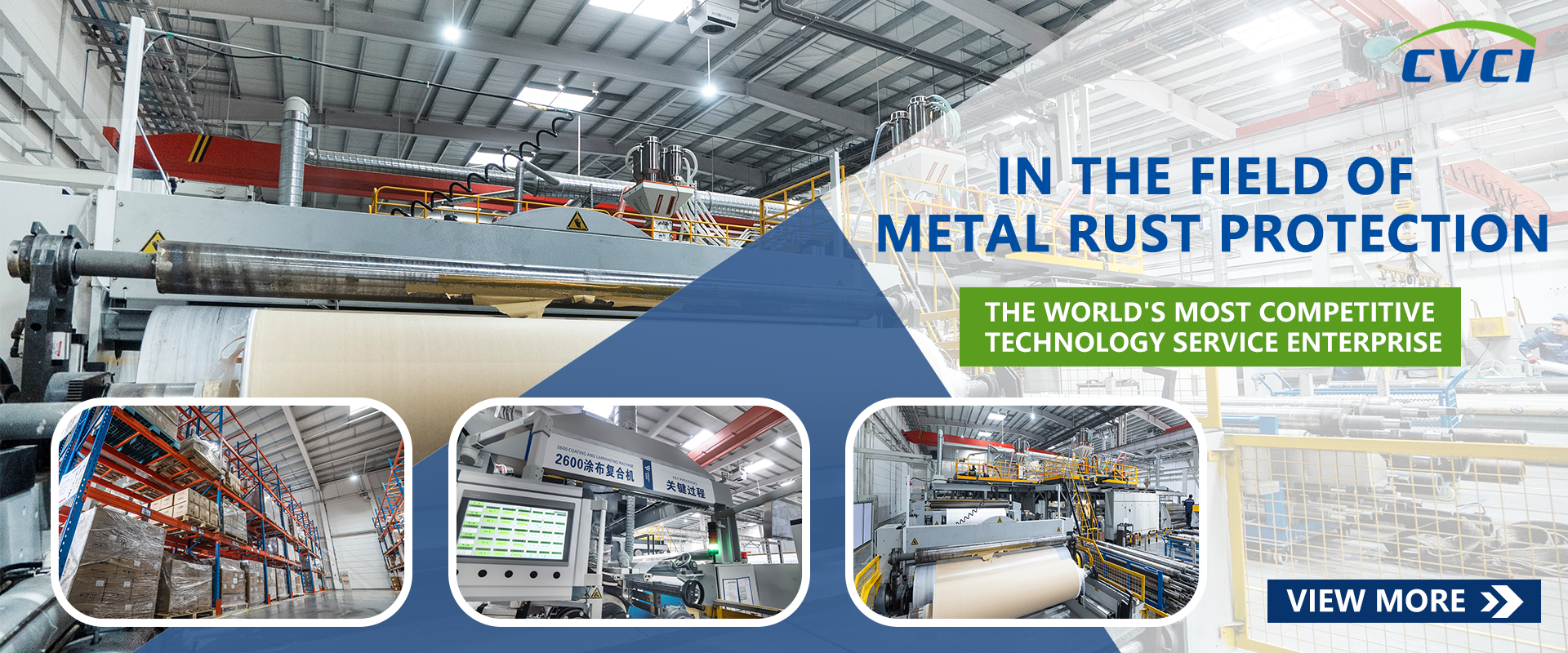
We also extend a sincere invitation for you to visit the CVCI facility in person to gain a firsthand understanding of our production capabilities, R&D infrastructure, and real-world application case studies.