


Analysis of Anti Rust Packaging Demand in the Vietnam Region
2026-05-22 16:25Why Is the Vietnamese Market More Prone to Rusting Issues?
Vietnam's manufacturing sector has experienced rapid growth, particularly in the fields of mechanical processing, automotive components, electronic assembly, and steel structure exports. Vietnam as a crucial export market; however, they have also encountered a very real challenge: the exact same batch of products—which remained in pristine condition in domestic warehouses—often suffers from yellowing, oxidation, or even localized rusting after being shipped to Vietnam.
Vietnam is characterized by a typically hot and humid climate, with consistently high atmospheric humidity levels. Coastal cities, in particular, experience humidity levels approaching saturation point throughout the entire year. In such an environment, even the slightest trace of residual moisture on a metal surface can trigger a gradual oxidation process. Furthermore, temperature fluctuations within shipping containers during maritime transport frequently lead to the formation of condensation—a phenomenon commonly referred to as container rain. Although this moisture is invisible to the naked eye, it is sufficient to gradually compromise the integrity of metal goods during transit.
Against this backdrop, the demand for anti-rust packaging within the Vietnamese market is undergoing a significant transformation. In the past, many companies found that standard plastic bags or simple stretch wrap sufficed; however, these solutions are proving increasingly inadequate today. This is because such packaging serves merely as a physical barrier and lacks the active properties required to prevent oxidation. Once internal humidity levels rise, the resulting issues become trapped within the packaging, where they are allowed to slowly escalate. Consequently, many instances of corrosion do not originate from external sources, but rather stem from an uncontrolled internal environment within the packaging itself.
This explains why an increasing number of Vietnamese clients are now embracing—and even actively requesting—the use of VCI anti rust packaging solutions.
Typical Applications of VCI packaging paper in the Vietnamese Market
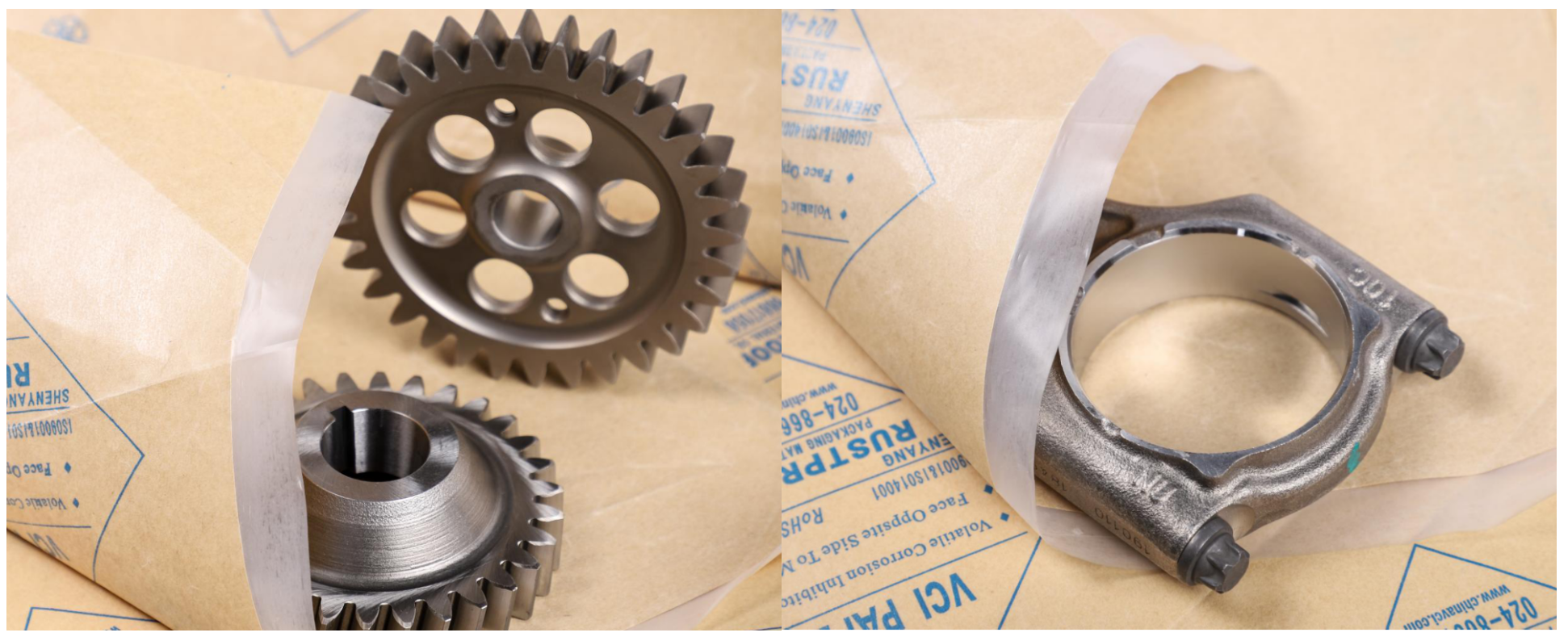
In the Vietnamese market, VCI packaging paper stands as the most fundamental and widely utilized material for corrosion prevention. It is typically employed for the individual wrapping or interlayer separation of mechanical parts, hardware components, bearings, gears, and small-to-medium-sized steel parts. Its primary advantage lies in its ease of use; it requires no additional oil application and does not interfere with subsequent assembly processes. For parts destined for further processing or immediate use, this "dry" method of rust prevention is generally considered the most acceptable option. Within a sealed environment, VCI packaging paper continuously releases corrosion-inhibiting molecules that form a protective layer on metal surfaces, thereby retarding the rate of oxidation. For long-distance shipping—particularly via sea—this inherent stability is absolutely critical.
The Role of VCI Anti Rust Film in Maritime Transport Scenarios
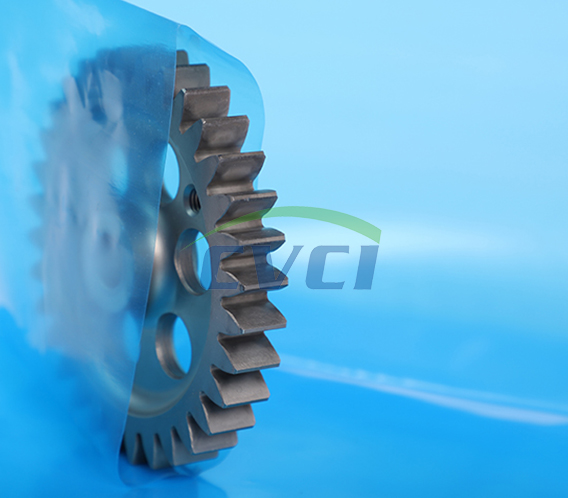
VCI anti rust film, conversely, is predominantly utilized for the bulk packaging of entire batches of goods or for the protection of large-scale equipment—such as steel plates, heavy machinery, and automotive assemblies. In the context of maritime transport, the distinct advantages offered by anti rust film become even more pronounced. It not only provides physical isolation but also creates a relatively stable, rust-inhibiting micro-environment within the packaging. For regions with high humidity like Vietnam, this dual layer of protection is absolutely critical. This is particularly true during containerized shipping, where temperature fluctuations are significant; VCI anti rust film helps mitigate the direct impact of condensation on metal surfaces to a considerable extent, thereby reducing the likelihood of rust formation during transit.
Why Are Moisture-Control Materials Becoming a Standard Requirement?
Beyond the anti-rust materials themselves, the Vietnamese market is placing increasing emphasis on moisture control. Many businesses have discovered through practical experience that even when VCI materials are utilized, issues can still arise if the humidity level inside the packaging remains excessively high. Consequently, the most sophisticated solutions currently employed typically incorporate composite absorbent paper or desiccants to effectively lower the moisture content within the packaging environment. Simply put, the prevailing trend in the Vietnamese market has shifted away from a singular focus on rust prevention toward a comprehensive, combined strategy of "rust prevention + moisture control." VCI materials are tasked with managing the risk of oxidation on metal surfaces, while moisture-absorbing materials regulate the ambient humidity; by combining these two elements, the overall stability and reliability of the packaging system are significantly enhanced.
CVCI's Capabilities in Providing Anti Rust Solutions for the Southeast Asian Market
CVCI's extensive experience in serving the Southeast Asian market over the long term serves as a testament to this approach. In our various application cases across Vietnam and neighboring regions, we rarely provide a standalone product; instead, we deliver integrated anti-rust solutions tailored to each client's specific product structure, shipping method, and storage duration. These solutions encompass a coordinated design featuring VCI packaging paper, VCI anti rust film, and composite moisture-absorbing materials. Furthermore, by taking into account the specific conditions of maritime shipping environments, we assist clients in optimizing their packaging structures to ensure maximum stability and protection. CVCI products have been exported to numerous Southeast Asian nations, allowing us to accumulate a wealth of practical experience in high-temperature and high-humidity environments—experience that has enabled us to successfully help many clients mitigate oxidation risks during the shipping process.
Contact CVCI for Anti Rust Solutions Tailored to the Vietnamese Market
If you are currently seeking more robust and reliable metal anti-rust packaging solutions for the Vietnamese market—or any other market within Southeast Asia—we invite you to contact CVCI. Based on your specific product characteristics and shipping requirements, we can provide a VCI anti-rust solution that is perfectly tailored to your needs. We also warmly welcome you to visit our manufacturing facility to gain firsthand insight into our production capabilities and view examples of our real-world applications, as we work together to optimize your export packaging system.